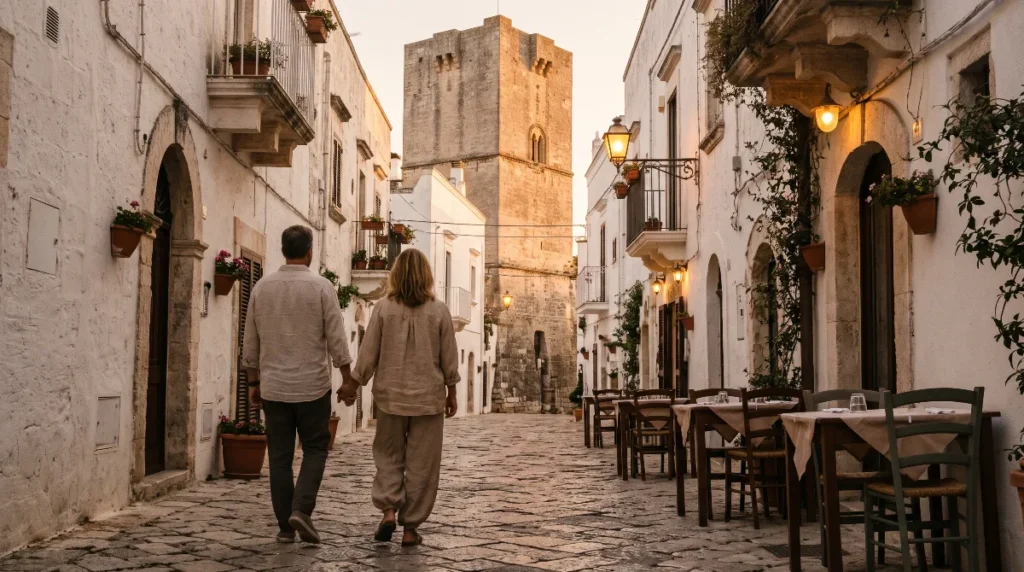
🌿 Local Insider Note on Alberobello slow travel: Welcome to our firsthand guide to Alberobello slow travel and visiting Alberobello without crowds, written from our year-round life in Ugento, Lower Salento.
When friends or international readers write to us about planning their first trip to Puglia, one name always comes up first: Alberobello. And honestly, we get it. Even after leaving our busy lives in Milan to settle down in Ugento, in the deep south of Salento, the first time Gloria and I walked among those dry-stone cone roofs felt like stepping into another century.
But let’s be completely honest with you, the way only locals who live here year-round can be: if you arrive in Alberobello at 11:30 AM in July or August, you won’t find slow travel. You will find tour buses, souvenir magnets made of plastic, and narrow lanes packed shoulder-to-shoulder.
Does that mean you should skip it? Not at all. You just need to change your clock, your route, and your perspective. Here is our personal slow travel roadmap to experiencing the real soul of Alberobello—and why it serves as the perfect gateway before driving south to the wilder, untamed stone architecture of Salento.
- 1. Parking & Van/Car Access: Via Cadore parking area (camper/van friendly) or Viale Indipendenza lots. Arrive before 7:00 AM. 📍 Open Parking Pin on Google Maps
- 2. Best Wind / Wind to Avoid: Inland hill town (420m elevation): crisp breeze at dawn even in summer; bring a light layer.
- 3. Best Anti-Crowd Time: Golden window 6:30 AM – 8:30 AM in Rione Aia Piccola (residential and souvenir-free), or after 6:30 PM.
- 4. Accessibility & Footwear: Polished limestone chianche steps can be slick with morning dew: wear grip-soled walking shoes. 👉 See our tested non-slip walking shoes for stone towns
- 5. Real Local Price Range: Local bar espresso & pastry: €2.50–€3.00. Authentic trattoria outside the tour-bus zone: €25–€32.
Why Timing Is Everything: Our 6:30 AM Rule in Rione Monti
The secret to loving Alberobello is simple: sleep nearby and wake up before the souvenir shops open. When we drove up from Ugento in October, we stepped into Rione Monti at 6:30 AM just as the first pink light hit the limestone cones (chianche).
At that hour, there are no crowds. You only hear the sweep of a broom on warm stone, the smell of espresso drifting from a half-open wooden shutter, and swallows darting between the pinnacles. By 9:30 AM, when the first excursion buses pull into the parking lots, you should already be finishing your pasticciotto and heading out to the countryside lanes.
If you arrive in Alberobello after 10:00 AM, skip Rione Monti completely at first and cross directly into Aia Piccola. Unlike the commercial district, Aia Piccola is still a residential neighborhood where roughly 400 locals actually live inside their trulli. Walk quietly, respect the closed curtains, and look for the small hand-written signs where elderly residents sell their own olive oil and almonds.
Rione Monti vs. Aia Piccola: Where Authentic Life Still Breathes
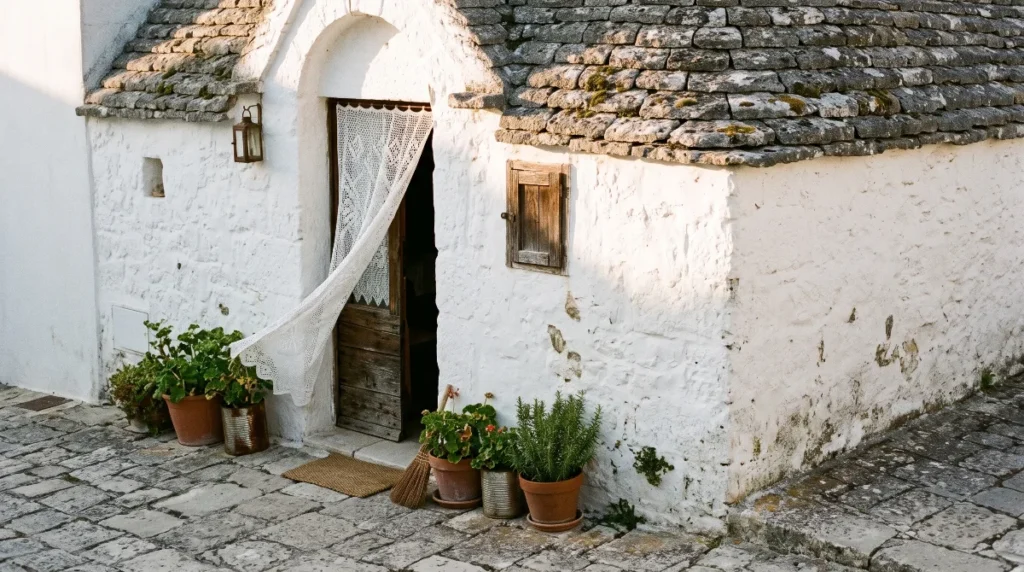
1. Aia Piccola: The Living Trulli Quarter
Just a three-minute walk from the main belvedere, Aia Piccola feels like a different village. There are no neon signs here. Notice how low the doorways are and how thick the dry-stone walls were built—without a single drop of mortar—originally designed so peasants could dismantle their roofs overnight to avoid paying property taxes to the Kingdom of Naples.
2. Trullo Sovrano & Basilica dei Santi Medici
Walk past the town hall toward the northern edge of the historic center to reach Trullo Sovrano, the only two-story trullo in town. Early in the morning, the small back garden filled with Mediterranean herbs is one of the calmest corners in the Itria Valley.
3. Cycling or Walking the Dry-Stone Country Lanes (Contrada Coreggia)
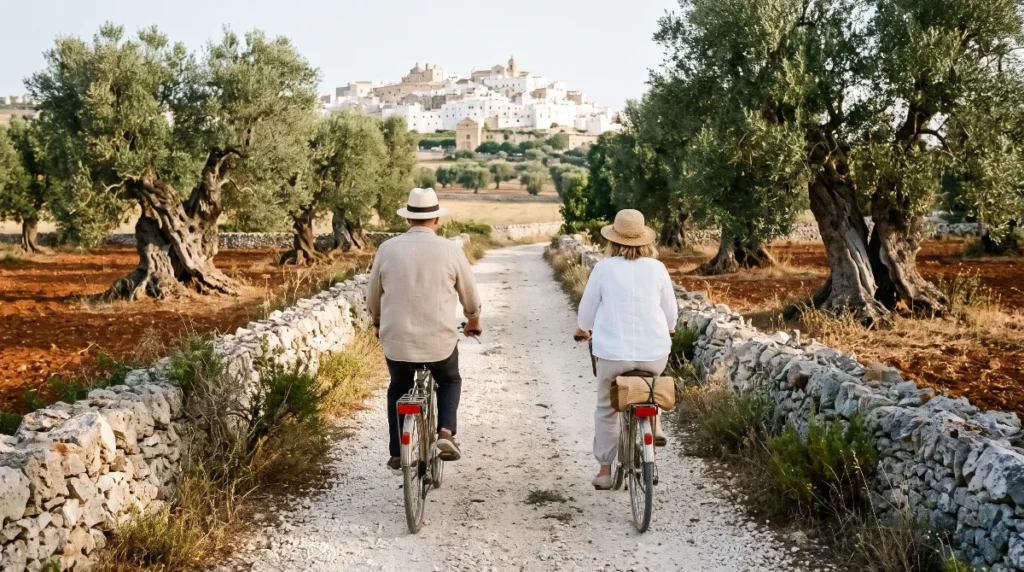
True slow travel begins where the asphalt ends. Rent a bike or walk the rural paths connecting Alberobello to Locorotondo and Martina Franca along the Ciclovia dell’Acquedotto Pugliese. Here, trulli aren’t boutiques—they are still toolsheds surrounded by red earth and centuries-old olive trees.
From Trulli to Salento’s “Pajare”: Why We Chose the Deep South
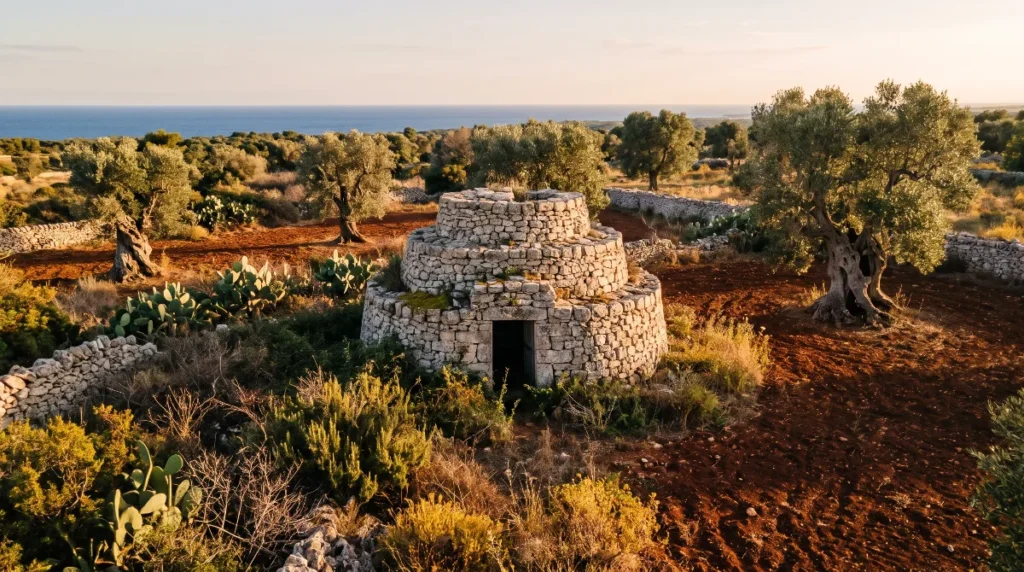
Visiting Alberobello is magical, but it also made Gloria and me appreciate why we chose Ugento and Lower Salento as our permanent home. While the Itria Valley (Alberobello, Ostuni, Polignano) has become heavily polished for international tourism, two hours further south the landscape becomes raw, authentic, and deeply welcoming.
In Salento, we don’t have cone-roofed trulli; we have Pajare and Furnieddhi—ancient dry-stone shelters built with flat, terraced barrels overlooking wild fennel fields and the Ionian Sea. You can hike past dozens of them along the breathtaking coastal trails of Ponte Ciolo or discover the golden stone craftsmanship in our interview with local Pietra Leccese artisans without seeing another tourist for hours.
🏡 Where to Stay in Alberobello & Salento (Our Handpicked Local Bases)
Skip the tourist traps. Discover our curated selection of authentic masserie, historic townhomes, and slow-living stays in Alberobello & Salento.
Explore Our Recommended Stays →Practical Slow Travel Tips: Parking, Seasons & Road Trip Routing
- Best Months to Visit: Late September to November, or April to early June. The light on the whitewashed lime is softer and temperatures are ideal for walking.
- Where to Park Without Stress: Avoid the central parking lots touted by street attendants; use the parking area near Viale Indipendenza or arrive by regional train (Ferrovie del Sud Est) for a true slow journey.
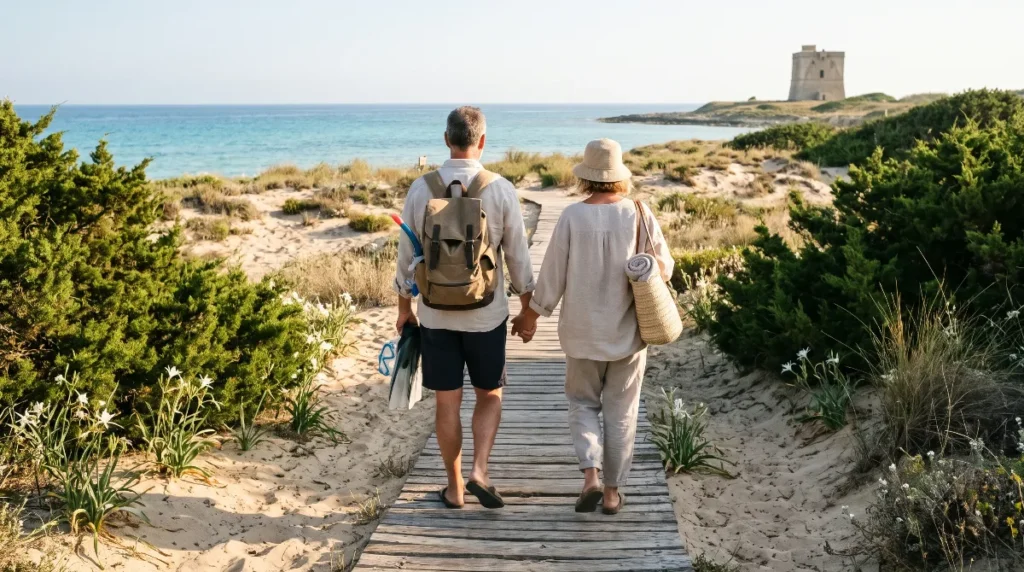
- How to Combine It with Salento: Spend one early morning in Alberobello, then drive south toward the Ionian coast to base yourself for a week in historic towns like Gallipoli’s Old Town, Presicce and its underground olive mills, or Santa Maria di Leuca.
🗺️ Interactive Slow Map: Alberobello & Itria Valley (3 Spots)
Click any pin on the map or tap a location card below to read our local guide or launch Google Maps turn-by-turn navigation:
🌿 Alberobello slow travel: 2026 Local FAQ & Slow Travel Checklist (By Carlo & Gloria)
Living year-round in Ugento after leaving Milan, we regularly update this reference on Alberobello slow travel to help you experience authentic Southern Italy away from tourist traps:
1. Essential Local Advice for Alberobello slow travel & Visiting Alberobello without crowds
When planning Alberobello slow travel, timing and wind direction make all the difference. For the best experience with visiting Alberobello without crowds, explore the historic lanes between 6:30 AM and 8:30 AM before tour buses arrive; then, when heading south to the Salento coast, check our Salento Wind & Beach Guide (Tramontana vs. Scirocco), and choose authentic local bases from our handpicked Where to Stay in Salento guide.
2. Off-Season Secrets: Alberobello vs Salento & Regional Resources
Exploring Alberobello slow travel in spring or autumn (May, June, September, and October) lets you connect with real village life and insights on Alberobello vs Salento. If you are considering a longer stay, read our Moving to Puglia & Expat Relocation Guide and check official cultural heritage schedules on the Official Italia.it Puglia Tourism Portal.

Always check the wind direction before leaving and arrive early in the morning: parking stress-free by 7:30 AM gives you two hours of pure silence that completely transform the experience.
Stop at a small local bar right as residents start their day, order an espresso or warm pasticciotto, and take ten slow minutes to absorb the real rhythm of the town before day-trippers arrive.
Get the Free Cheat Sheet: 15 Beaches by Wind (Scirocco vs. Tramontana) + Carlo & Gloria’s 10 Verified Local Trattorias
Skip overpriced tourist traps: get our pocket PDF wind-matrix to pick the calmest turquoise cove every morning, plus the 10 family-run trattorias where we actually eat year-round.
🛫 Dreaming of a Longer Stay or Moving to Puglia?
After trading city life in Milan for year-round slow living in Ugento, we created an honest roadmap covering real cost of living, property hunting, and local survival secrets in Salento.
Read Our Expat & Relocation Guide →ℹ️ Affiliate Disclosure: Links to walking/water shoes, travel gear, and accommodations on this page are affiliate links (Amazon / Booking). As an Amazon Associate, Puglia Love earns from qualifying purchases at zero extra cost to you.