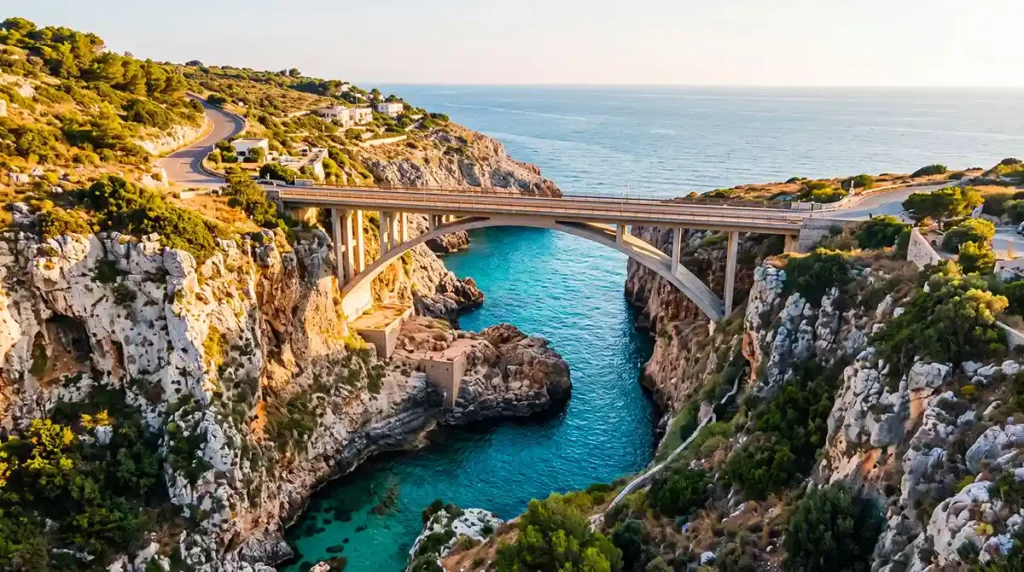
Dramatically suspended over a turquoise rocky canyon where the Adriatic Sea carved its way into limestone cliffs, the Ciolo Bridge (Ponte del Ciolo) is one of Salento’s most breathtaking natural wonders. Often dubbed the “little fjord of Puglia,” this iconic spot combines rugged coastal beauty, crystal-clear waters, and rich local folklore.
Whether you are looking for spectacular views along the coastal drive, planning a summer dip in deep waters, or searching for scenic hiking trails, this guide will help you experience Ciolo like a true local.
⚡ Ciolo Bridge: Quick Facts for Travelers
- Bridge Height: 36 meters (approx. 118 feet) above sea level.
- Water Depth: 8 to 10 meters in the center of the fjord cove.
- Location: Gagliano del Capo (Basso Salento), near Santa Maria di Leuca.
- Best For: Swimming, photography, coastal hiking, scenic drives.
- Cliff Diving Warning: Jumping off the bridge is extremely dangerous and strictly prohibited. Local expert divers sometimes perform here, but visitors should strictly avoid diving from the bridge top!
1. The Magic of Ciolo: Salento’s Natural Fjord
The name Ciolo originates from the local Salentino dialect word “Ciole”, referring to the magpies and jackdaws that historically nested in the steep cliffs of the gorge. Over millennia, rainwater eroded the limestone plateau, creating a deep canyon that opens directly into a sea cove of extraordinary clarity.
Spanning this dramatic gorge is the famous concrete bridge, built in the 1960s to connect the coastal road between Otranto and Santa Maria di Leuca. Standing on the bridge offers an unforgettable panorama: to one side, the rugged green canyon winding inland; to the other, the open sea blending into deep azure shades.
2. How High is Ciolo Bridge? (Cliff Diving & Safety)
One of the most frequent questions travelers ask is about the Ciolo Bridge height. The structure stands suspended 36 meters above sea level.
While viral videos on social media show daredevil locals leaping from the arch into the gorge, jumping from the bridge is illegal, highly dangerous, and has resulted in serious injuries. If you want to enjoy the water safely:
- Stick to lower rocks: The inner cove has multiple natural ledge platforms ranging from 1 to 5 meters, ideal for safe diving.
- Use water shoes: The entry into the cove is rocky, making sturdy footwear essential for getting in and out of the sea comfortably.
- Check sea conditions: When strong easterly winds blow, waves inside the narrow fjord can become choppy. Before heading out, make sure to read our guide on choosing the best beach based on the wind.
3. How to Get There & Parking Tips
Located along the panoramic SP358 coastal route, reaching Ciolo is simple, but parking during peak summer months requires a bit of strategy.
Driving & Parking Logistics
Public transport in deep Salento is limited, so renting a compact car is highly recommended (as noted in our Puglia Travel Guide). When you arrive at Ciolo:
- Official Parking Laybys: There are small designated parking areas along the road curves near the iconic bar/restaurant overlooking the canyon.
- Early Morning Arrival: During July and August, parking fills up quickly by 10:00 AM. Arrive around 8:30 AM to secure a spot and enjoy the cove in peace.
- Off-Season Advantage: Visiting from September to May means hassle-free parking and uninterrupted views.
4. Hiking the “Sentiero delle Cipolliane”: Slow Travel at Its Best
For outdoor enthusiasts and lovers of slow travel, Ciolo is not just a seaside stop—it is the terminus of one of Puglia’s most spectacular coastal hiking trails: the Sentiero delle Cipolliane.
This ancient path once used by farmers and salt smugglers connects the historic town of Gagliano del Capo down to the Ciolo gorge:
- Distance: Approx. 2.5 km (one way).
- Difficulty: Easy to Moderate (rocky terrain, comfortable hiking shoes required).
- Highlights: Century-old dry stone walls (*pajare*), endemic Mediterranean scrub, wild herbs, and ancient caves (*Grotte delle Cipolliane*) carved into the cliffs.
💡 Local Tip by Carlo & Gloria
“When we want to escape the crowded beaches in mid-summer, we come to Ciolo in the late afternoon around 5:30 PM. The sun lights up the limestone cliffs in deep gold, the day-trippers start heading home, and you can enjoy an aperitivo at the panoramic bar above the bridge watching the sun sink behind the hills. It’s pure Salento magic.”
5. Exploring Nearby Gems in Basso Salento
After visiting Ciolo Bridge, you are perfectly positioned to explore the far southern tip of the Apulian peninsula:
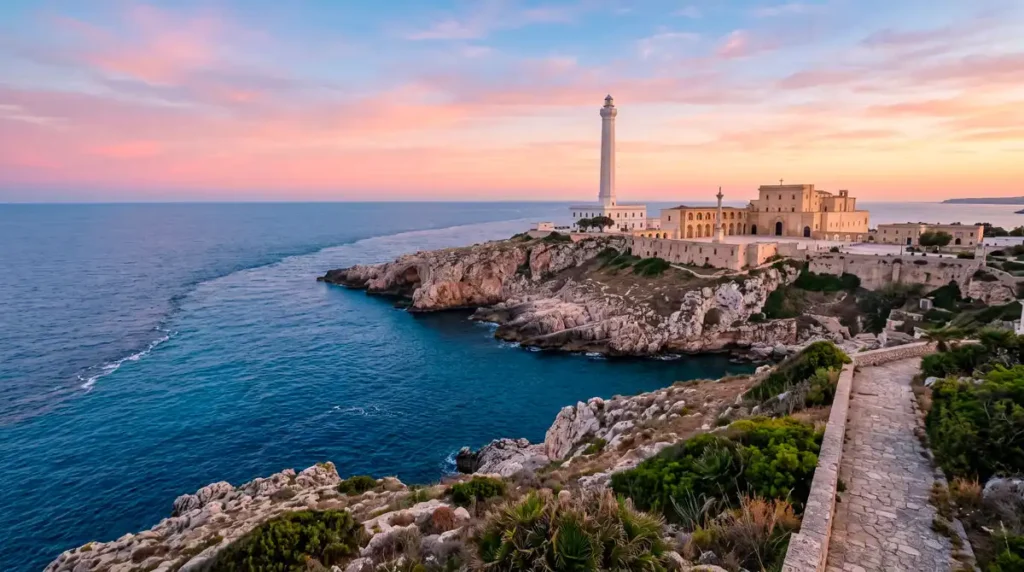
- Santa Maria di Leuca (10 mins south): Visit the historic lighthouse, grand 19th-century villas, and the sanctuary where the Adriatic and Ionian seas meet.
- Ugento & Its Historic Borghi (25 mins west): Head inland to discover rich messapian history and authentic local cuisine. Don’t miss our complete Ugento travel guide for dining and cultural tips.
Plan Your Visit to Ciolo
Ponte Ciolo is proof that Salento extends far beyond sandy beaches. By taking your time, respecting local safety guidelines, and exploring the surrounding nature trails, you will discover one of the most thrilling landscapes in Southern Italy.
Discover more authentic local itineraries and slow travel guides on Puglia Love!

3 thoughts on “Ponte Ciolo: The Bridge, the Fjord, and the Legendary Dives of Salento”