
Choosing the right base in Southern Italy can transform your holiday. It turns an exhausting logistics puzzle into a restorative retreat. Salento features over 250 kilometers of diverse coastline and dozens of rural villages. In addition, contrasting landscapes separate its two distinct seas. Therefore, deciding where to stay in Salento is the single most critical decision you will make.
We are Carlo and Gloria. A few years ago, we left our corporate lives in Milan. We made Ugento, in the heart of Basso Salento, our permanent home. Living here year-round taught us an essential truth. Specifically, postcard images of Puglia often promote overcrowded seaside strips. These coastal areas become chaotic in August and empty out completely in winter.
Conversely, the authentic soul of Salento thrives inland. You will find it among centuries-old olive groves and restored masserie. You will also discover it in historic townhouses with limestone star-vaulted ceilings. This comprehensive accommodation guide helps you choose your ideal base. Below, you will find geographical breakdowns, property comparisons, seasonal pricing advice, and our exact booking criteria.
⚡ Salento Accommodation Quick Decision Framework
- Best for Slow Travel & Year-Round Atmosphere: Inland Borghi (Ugento, Presicce-Acquarica, Specchia).
- Best for Luxury, Peace & Farm-to-Table Dining: Restored Countryside Masserie.
- Best for Dramatic Scenery & Coastal Trekking: Adriatic Cliffs (near Ponte Ciolo & Tricase Porto).
- Best for Sandy Beaches & Families: Ionian Coastline (Torre San Giovanni & Pescoluse).
- Golden Rule for Length of Stay: Choose one strategic base in Basso Salento for 5 to 7 nights rather than changing hotels every two days.
1. The Geography of Salento: Strategic Bases Compared
Salento forms a narrow peninsula between two distinct bodies of water. The calm, sandy Ionian Sea lies to the west. Meanwhile, the rugged, deep-blue Adriatic Sea borders the east. In the southern peninsula, the land is only 30 to 40 kilometers wide. Therefore, choosing a central base allows you to reach either coast in less than 25 minutes.
Inland Historic Borghi: The Authentic Sweet Spot
Inland villages like Ugento, Presicce-Acquarica, and Felline offer the best balance of culture and value. In these towns, life revolves around historic piazzas rather than seasonal tourism. You can walk to authentic bakeries in the morning. Later, you can enjoy intimate wine bars in the evening. Furthermore, inland bases protect you from coastal humidity and heavy summer traffic.
Countryside Masserie: The Rural Sanctuary Experience
If you seek complete privacy, fortified masserie situated among ancient olive groves provide an unforgettable stay. These estates offer private swimming pools and on-site organic gardens. In addition, they feature magnificent historic stone architecture. However, you will need a rental car for every outing, including evening dinners.
The Ionian Coast (West): Sandy Shores and Sunsets
The western coast features wide golden sand dunes and calm turquoise water. Coastal towns like Torre San Giovanni and Lido Marini are vibrant from June to September. Nevertheless, they lack the historic architecture found inland. They can also feel deserted from November to April.
The Adriatic Coast (East): Dramatic Cliffs and Wild Fjord Coves
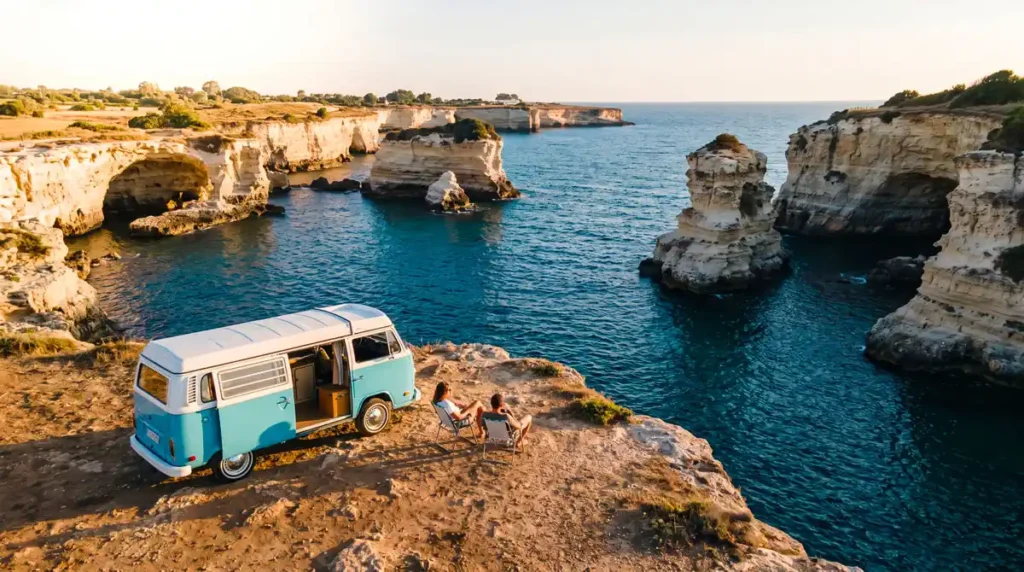
The eastern coastline rises steeply above the sea. As a result, it offers dramatic limestone cliffs, sea caves, and deep rocky fjords. Bases near Castro, Tricase Porto, and the iconic Ciolo gorge are perfect for couples, hikers, and wild swimmers. However, entry into the water is almost exclusively rocky.
2. Understanding the 4 Main Types of Accommodation in Puglia
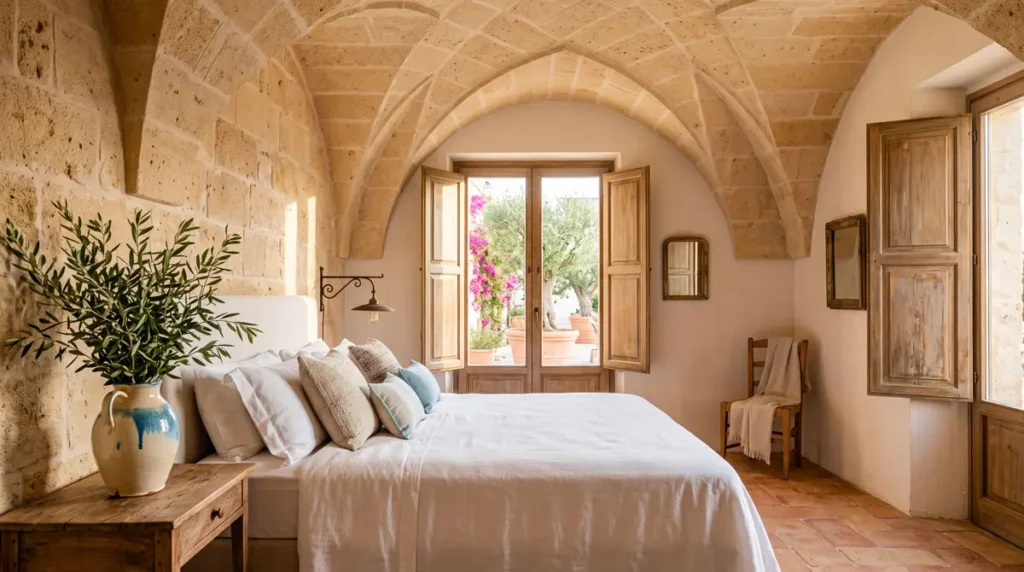
To book with confidence, you should understand the distinct architectural styles available across Salento.
1. Fortified Masserie (Historic Farm Estates)
Masserie were originally self-sufficient agricultural compounds. Local lords built them between the 16th and 18th centuries to protect workers from pirate raids. Today, restored masserie range from rustic agriturismi to luxury five-star boutique hotels. When booking, always verify whether the property is an active farm producing its own olive oil and wine.
2. Palazzi Storici & Townhouses with Volte a Stella
In historic borghi, noble palazzi and townhouses feature majestic star-vaulted ceilings (volte a stella). Local stonemasons crafted these arches from porous Pietra Leccese limestone. These rooms offer incredible thermal insulation. Consequently, they stay naturally cool during peak summer heat. Staying in a historic palazzo gives you a true taste of aristocratic southern Italian architecture.
3. Restored Pajare and Lamie (Rural Stone Huts)
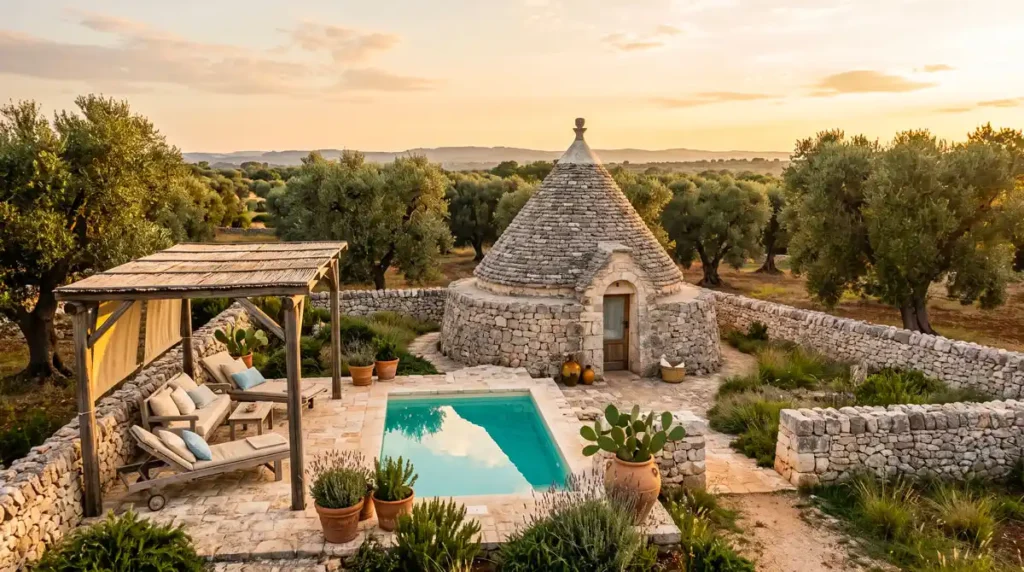
Pajare are ancient circular dry-stone huts. Historically, shepherds and farmers used them as temporary shelters during harvest seasons. Today, thoughtful restorations have transformed these rustic structures into luxury mini-villas. They often feature outdoor kitchens, private plunge pools, and panoramic views over olive groves.
4. Coastal Boutique B&Bs and Guesthouses
Small, family-operated bed and breakfasts in coastal marinas provide convenient beach access. While they generally lack historic grandeur, they offer warm hospitality. Furthermore, local hosts serve freshly baked pasticciotti every morning.
3. Town-by-Town Breakdown: Where to Base Yourself in Basso Salento
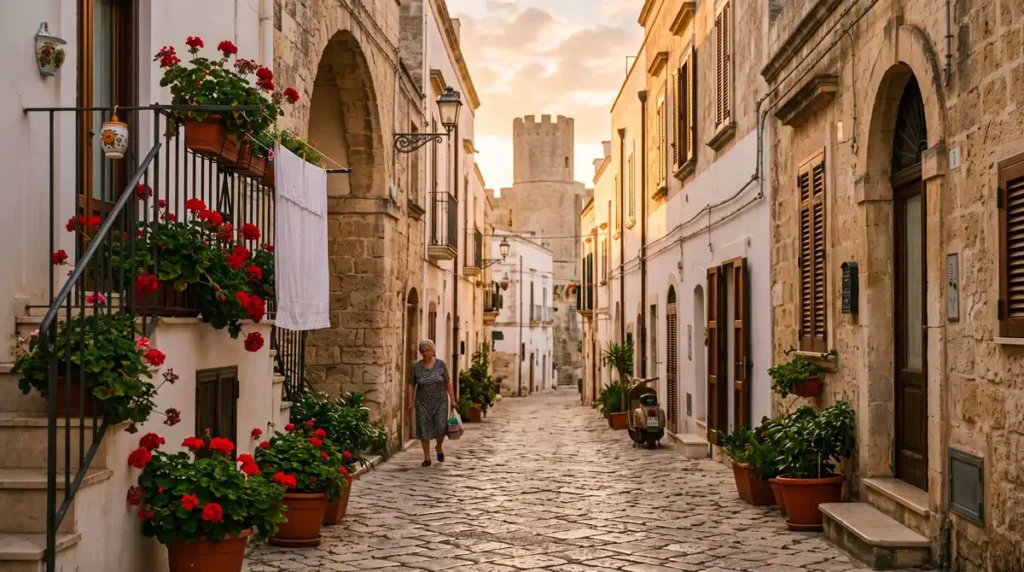
Here is our curated analysis of the best specific towns to book in the southern peninsula.
Ugento: The Central Strategic Powerhouse
Ugento is our hometown and the ideal strategic headquarters for exploring Southern Puglia. The town boasts rich Messapian heritage, an imposing castle, and an exceptional archaeological museum. From Ugento, you can reach the sandy beaches of Torre San Giovanni in 8 minutes. In addition, you can reach the Adriatic cliffs in 20 minutes. For an in-depth exploration, read our complete Ugento travel guide.
Presicce-Acquarica: Baroque Elegance and Subterranean Wonders
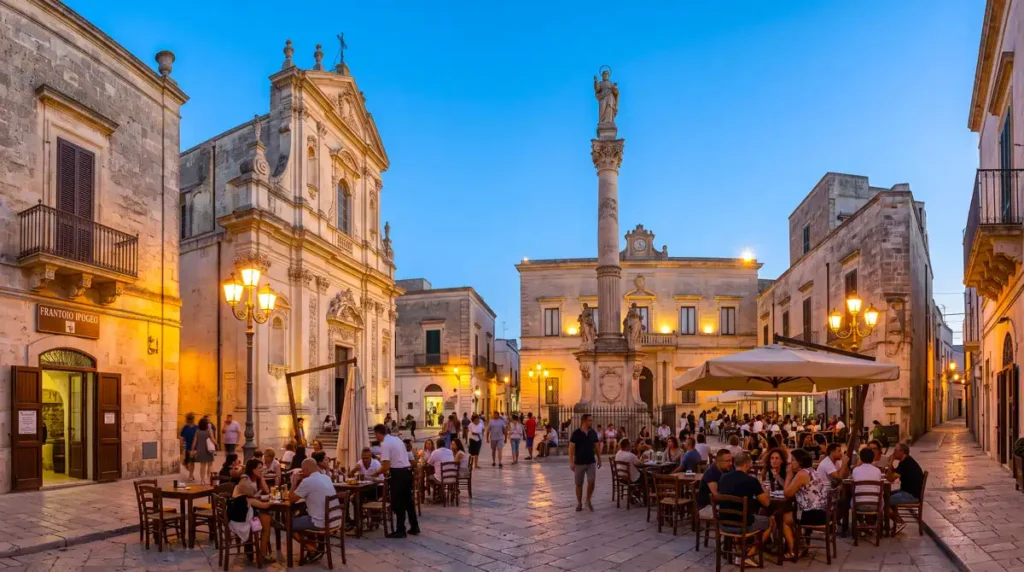
Presicce is officially certified among I Borghi più Belli d’Italia. In fact, it is internationally famous as the City of Underground Olive Oil Mills. Staying in Presicce allows you to wake up in quiet baroque alleyways. You can also visit underground limestone mills and enjoy evening aperitivi in Piazza del Popolo. Learn more about the village in our Presicce Puglia travel guide.
Felline: The Gastronomic Capital of the Borghi
If culinary excellence is your primary travel goal, Felline is an unbeatable base. This tiny medieval village features quiet cobblestone courtyards. These courtyards house some of the finest traditional and modern restaurants in Puglia. You can spend your days exploring hidden beaches. Then, you can enjoy handmade pasta at night without driving after dinner. Discover top dining spots in our guide on where to eat in Felline.
Gagliano del Capo & Ponte Ciolo: Wilderness and Cliffside Charm
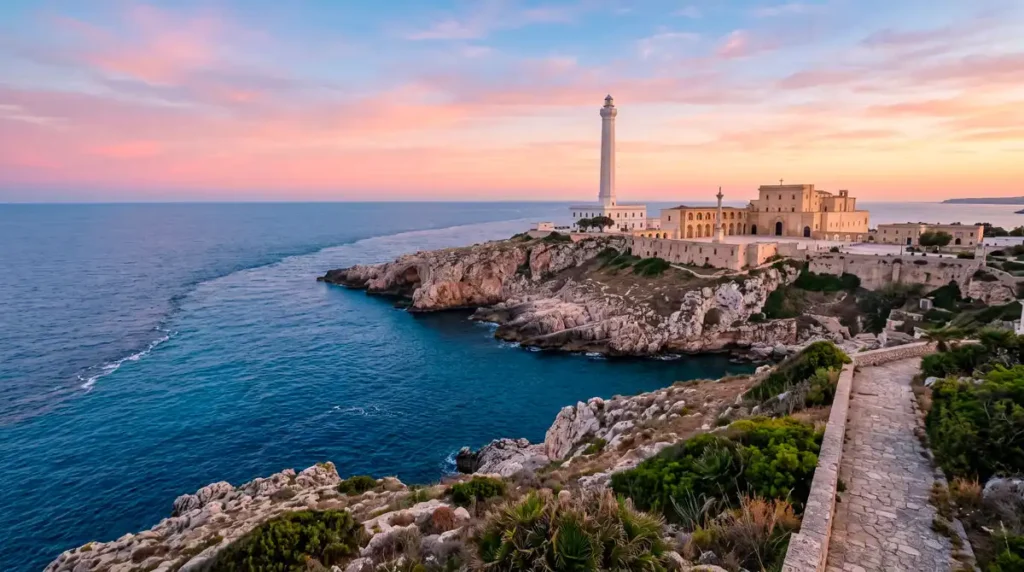
Located near the southern tip of Puglia, Gagliano del Capo offers dramatic coastal scenery. It also provides immediate access to the famous Ciolo gorge. It is the perfect retreat for travelers seeking outdoor adventure and coastal trekking along the Sentiero delle Cipolliane. Plan your visit with our Ciolo Bridge travel guide.
💡 Local Tip by Carlo & Gloria
“When choosing accommodation in Salento, always check if your room has authentic volte a stella (star-vaulted stone ceilings). These traditional limestone ceilings are not just beautiful architectural features; they also keep rooms naturally cool during hot summer days. Furthermore, always ask your host if private parking is included, as historic centers have narrow, restricted streets.”
4. 6 Essential Booking Criteria for an Authentic Stay
Before entering your credit card details on any booking platform, use this practical checklist:
- Confirm Private Parking: Historic village centers feature narrow streets and strict resident-only zones (ZTL). Always ask your host if private parking or accessible street parking is available nearby.
- Check Air Conditioning & Heating: Thick stone walls provide excellent insulation. However, efficient climate control is essential for humid August nights or chilly January workations.
- Look for Locally Sourced Breakfast: An authentic Apulian B&B should serve warm pasticciotti from a local bakery. In addition, look for fresh seasonal fruit, local cheeses, and artisanal olive oil.
- Verify Wi-Fi Speed for Remote Work: If you plan to work remotely, ask for a verified speed test. This step is especially important for masserie situated deep in the countryside.
- Inquire About Star-Vaulted Ceilings (Volte a Stella): Rooms with authentic vaulted ceilings offer superior acoustic privacy and natural cooling.
- Rent the Right Car: Exploring rural masserie and hidden coves requires a compact rental car with full insurance. We discuss this requirement in detail in our main Puglia Travel Guide.
5. Seasonal Guide: When to Book and What to Expect
Understanding the seasonal rhythm of Salento will help you balance weather, crowds, and accommodation pricing:
- High Summer (July & August): Expect hot temperatures (32°C to 38°C), peak prices, and crowded beaches. Masserie require minimum stays of 5 to 7 nights and book out 6 to 9 months ahead.
- The Golden Shoulder Season (May, June, September, October): This is the absolute best time for slow travel. The sea is warm, and temperatures average a comfortable 24°C to 28°C. Furthermore, prices drop by 30% to 50%, and local sagre food festivals take place everywhere.
- Autumn & Winter (November to April): Ideal for digital nomads, writers, and travelers seeking tranquility. While some rural masserie close for winter, boutique townhouses in historic borghi remain open and offer attractive monthly rates.
6. Frequently Asked Questions About Staying in Salento
Is it better to stay on the Ionian or Adriatic coast of Salento?
Neither coast is universally better; rather, they serve different travel styles. The Ionian coast features shallow sandy beaches ideal for relaxation and sunset views. Conversely, the Adriatic coast offers dramatic cliffs, deep fjords, and sunrise vistas. By choosing an inland base like Ugento or Presicce, you can visit both coasts easily depending on daily wind conditions. Make sure to consult our guide on choosing the best beach based on the wind.
How many nights should you stay in Salento?
We strongly recommend staying a minimum of 5 to 7 nights in Basso Salento. This duration allows you to explore historic borghi, dine at authentic trattorias, and visit coastal parks without rushing.
Are masserie suitable for families with young children?
Yes, many countryside masserie welcome families. They often offer large open spaces, swimming pools, and farm animals. However, several luxury masserie operate as adult-only retreats. Therefore, always verify the child policy before booking.
Do you need to tip hotel and masseria staff in Puglia?
Tipping is not mandatory in Italy. However, leaving a modest gratuity (5% to 10%) for exceptional service at boutique masserie is warmly appreciated.
Where should you eat while staying in Salento?
We advise avoiding half-board hotel dining packages. Instead, venture out every evening to taste authentic peasant cooking, fresh handmade orecchiette, and local wine using our curated list of authentic trattorias in Salento.
Plan Your Slow Travel Retreat with Puglia Love
Choosing the right accommodation in Salento is about finding a place that allows you to slow down and connect with the community. By choosing family-owned boutique townhouses and historic masserie, you actively protect the architectural and cultural heritage of our beloved region.
Explore our full collection of destination guides, culinary itineraries, and local secrets on Puglia Love to plan your journey!

1 thought on “Where to Stay in Salento: Best Areas, Masserie & Local Bases”