Have you ever dreamed of trading stressful city traffic for morning walks among centuries-old olive trees? Many people fantasize about relocating to Southern Italy. However, taking the leap requires practical knowledge, detailed financial planning, and honest local insights.
We are Carlo and Gloria. A few years ago, we left our fast-paced corporate lives in Milan. We chose to make Ugento, in the sunny Basso Salento region, our permanent home. Moving to Puglia was the best decision of our lives. Nevertheless, we faced bureaucratic hurdles, cultural shifts, and complex renovation challenges along the way.
In this definitive guide, we provide a comprehensive, step-by-step roadmap for relocating to Southern Italy. Specifically, you will discover the real cost of living, property buying advice, tax incentives for foreigners, healthcare logistics, and our insider secrets for thriving in Salento year-round.
⚡ Moving to Puglia: Fast Facts for Expats & Future Residents
- Relocation Target Area: Basso Salento (Ugento, Presicce-Acquarica, Specchia, Tricase, Gagliano del Capo).
- Average Monthly Living Cost (Couple): €1,400 to €2,000 (including utilities, high-speed internet, and groceries).
- Real Estate Price Advantage: Up to 60% lower purchase prices compared to Northern Italy, Tuscany, or major European hubs.
- Special Tax Regimes: Flat 7% income tax for foreign retirees in southern municipalities under 20,000 residents.
- Top Essential Requirements: Learning conversational Italian, obtaining an Italian Codice Fiscale, and owning a reliable compact car.
1. Why Move to Salento? Our Personal Journey from Milan to Ugento
Living in Milan meant constant rush hours, exorbitant housing costs, and grey winter skies. We craved a lifestyle where human connections, wholesome seasonal food, and daily sunshine took center stage.
When we arrived in Ugento, we immediately felt the restorative power of slow living. In Salento, neighbors greet you warmly in the morning. Furthermore, local merchants know your name, and you can swim in crystal-clear seas from May through October.
However, moving here permanently is very different from spending a sunny two-week holiday. Summer brings vibrant crowds and lively festivals. Conversely, winter brings peaceful solitude, closed seaside kiosks, and shorter daylight hours. You must adapt to winter rhythms, local store schedules, and slower administrative processes. Embracing this seasonal contrast is the key to thriving as a permanent resident.
2. Real Cost of Living in Puglia: An Exhaustive Monthly Breakdown
One of the greatest advantages of relocating to Southern Italy is the remarkably affordable cost of living. Compared to major European capitals, the UK, or North America, your daily expenses decrease significantly.
Housing Costs (Rent vs. Purchase)
Long-term rentals in inland historic villages offer phenomenal value. A restored two-bedroom historic townhouse with traditional limestone star-vaulted ceilings costs between €450 and €750 per month. If you prefer a rural masseria or countryside villa with land, expect to pay between €800 and €1,300 monthly.
Utilities and Energy Bills
Utility expenses vary depending on your home’s heating infrastructure. Because traditional stone houses retain temperature well, summer cooling costs remain moderate. In total:
- Electricity: €70 to €110 per month (higher during hot summer months with air conditioning).
- Water & Waste Disposal (TARI): €30 to €50 per month.
- Heating (Pellet stove, heat pump, or GPL gas): €80 to €150 monthly during winter (December to February).
- High-Speed Fiber Internet: €25 to €35 per month for fast FTTH connections in town centers.
Groceries, Weekly Markets, and Food Expenses
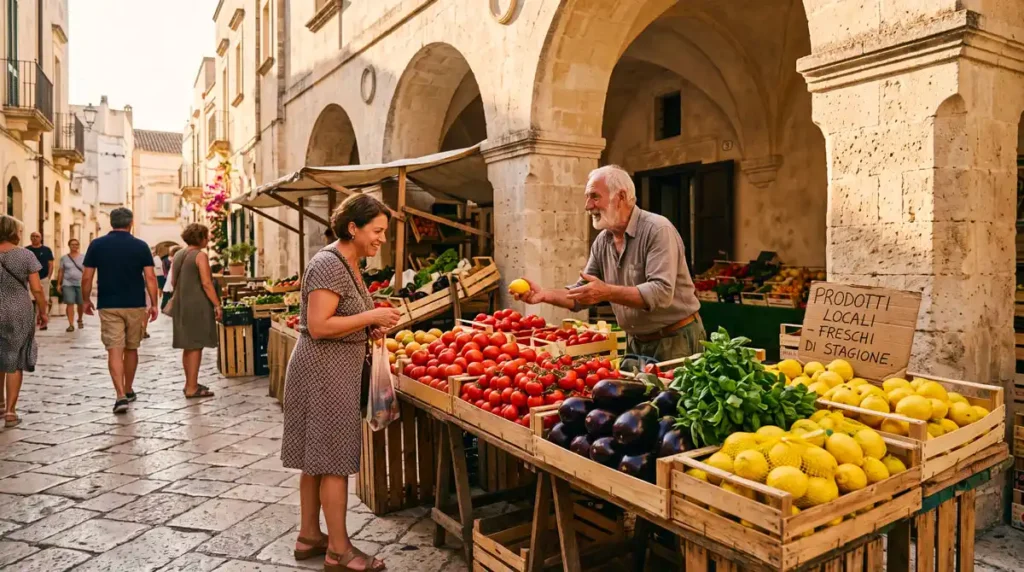
Food in Salento is exceptionally fresh, seasonal, and affordable. Shopping at weekly open-air markets and neighborhood bakeries costs around €350 to €500 per month for a couple. You will purchase sun-ripened produce directly from local farmers at unbeatable prices. In addition, fresh seafood from coastal fishing ports like Torre San Giovanni costs a fraction of supermarket rates.
Dining Out and Leisure
Eating out in Salento is a daily joy rather than a luxury expense. A three-course dinner for two at an authentic inland osteria, including local Negroamaro wine, costs between €45 and €65. An espresso at the historic town square costs €1.10, while a classic pasticciotto pastry costs €1.50. To explore our favorite culinary destinations, check out our guide on authentic trattorias in Salento.
Transportation and Vehicle Ownership
Public transit in deep Salento is minimal. Therefore, owning a vehicle is essential. Car insurance averages €350 to €600 annually, while annual vehicle road tax (bollo) ranges from €120 to €250 depending on engine size. Fuel costs average €100 to €180 monthly for regular regional driving.
3. Buying Property in Salento: Historic Palazzi, Masserie & Country Homes
Salento offers exceptional real estate opportunities for international buyers. However, navigating the Italian property acquisition process requires rigorous due diligence and technical precision.
The 4 Main Property Categories
- Historic Townhouses in Borghi: Located in towns like Ugento and Presicce-Acquarica, these homes feature iconic star-vaults (volte a stella) and rooftop terraces. They offer walkability to all daily amenities.
- Countryside Masserie: Historic fortified farmhouses surrounded by olive groves. They require higher capital investment but offer immense architectural prestige. To understand their character, read our guide on where to stay in Salento.
- Rural Pajare and Lamie: Ancient dry-stone agricultural buildings situated on large plots of land. They are ideal for creating private eco-friendly retreats.
- Coastal Villas and Apartments: Convenient for summer holidays, but often damp and uninsulated for year-round winter living.
The Step-by-Step Purchase Process
The Italian buying process follows three formal stages:
- Proposta d’Acquisto (Formal Purchase Offer): A written offer accompanied by a small good-faith deposit (usually €5,000 to €10,000).
- Contratto Preliminare / Compromesso (Preliminary Contract): A legally binding agreement detailing all property data, sale conditions, and a 10% to 20% confirmatory deposit (caparra confirmatoria).
- Rogito Notarile (Final Deed of Sale): Signed before an official Italian Public Notary (Notaio), who verifies legal titles and registers the transaction.
Taxes, Notary Fees, and Purchase Costs
Always budget an additional 9% to 15% on top of the agreed purchase price to cover closing costs:
- Purchase Tax (Imposta di Registro): 2% on the cadastral value if you register the property as your primary residence (Prima Casa) within 18 months, or 9% for second homes.
- Notary Fees: Typically €1,500 to €3,500 depending on property value.
- Real Estate Agency Commission: Usually 3% to 4% plus VAT (IVA).
- Technical Survey / Geometra Fee: €800 to €1,500 for a thorough compliance check.
Renovating a Historic Home in Salento: The Hard Reality
Buying an old stone townhouse is a romantic dream. However, renovating it requires immense patience and specialized technical knowledge. Restoring traditional limestone star-vaulted ceilings requires master artisans rather than general contractors.
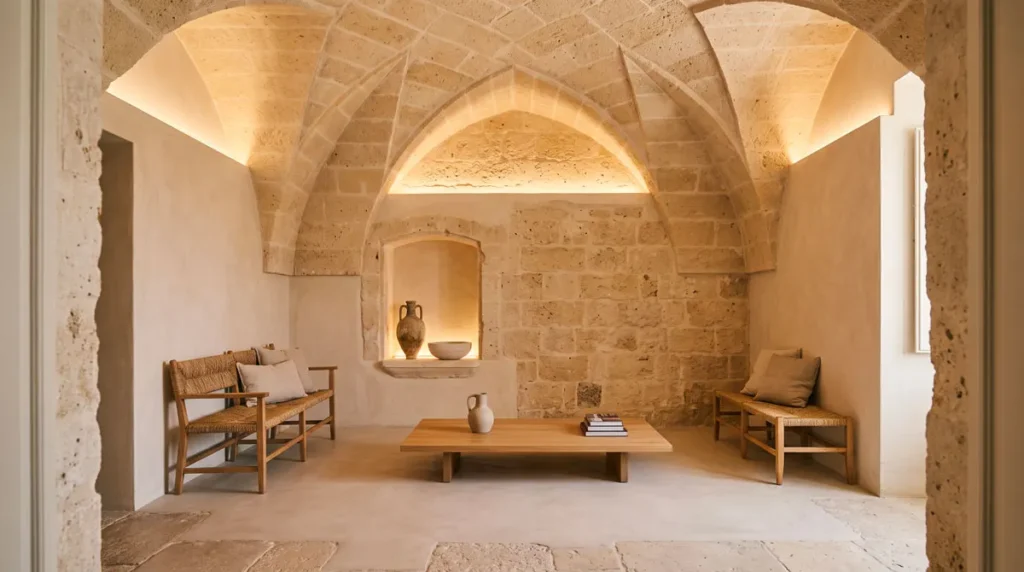
First, rising damp in porous Pietra Leccese stone represents your biggest structural challenge. As a result, you must install specialized breathable lime plasters and underfloor ventilation igloos. Second, obtaining municipal building permits (SCIA or CILA) can take two to six months. Therefore, you should always expect renovation timelines to double and construction budgets to increase by at least 20 percent.
4. Visas, Residency Pathways, and Special Tax Incentives
Moving to Italy requires choosing the correct legal visa pathway before your arrival.
The 7% Flat Tax Regime for Foreign Retirees
Foreign retirees who transfer their tax residency to eligible Southern Italian municipalities with fewer than 20,000 residents (including Ugento, Presicce-Acquarica, and Gagliano del Capo) enjoy a flat 7% tax rate on all foreign-sourced income and pensions for up to 10 consecutive years.
Digital Nomad Visas and Elective Residence Visas
Non-EU citizens have two primary pathways:
- Elective Residence Visa (Visto per Residenza Elettiva): For retirees or individuals with substantial passive income (investments, pensions, rental properties). This visa strictly prohibits working in Italy.
- Digital Nomad Visa: For highly qualified remote workers employed by foreign companies or self-employed freelancers earning verified remote income.
The First 30 Days: Your Bureaucratic Survival Checklist
Arriving permanently in Puglia triggers several immediate bureaucratic tasks. Follow this strict chronological sequence during your first month:
- Obtain Your Codice Fiscale: This unique tax identification number is the master key to life in Italy. You need it to sign leases, purchase vehicles, and set up utilities.
- Open an Italian Bank Account: Having a local IBAN is necessary for setting up direct debits for electricity, water, and municipal taxes.
- Sign Your Lease or Final Deed: Secure your registered long-term rental contract or property deed.
- Apply for Municipal Residency (Iscrizione Anagrafica): Visit the local town hall (Comune) to submit your residency application.
- Await the Police Home Visit: Local municipal police (Polizia Locale) will physically visit your residence within 45 days to verify that you actually live there.
- Register with the National Healthcare System (SSN): Obtain your health card (Tessera Sanitaria) and select your local family doctor.
5. Daily Life, Healthcare, and Community Integration
Integrating into a Salentino village is a deeply rewarding experience if you approach the local culture with respect and openness.
Healthcare and the Italian SSN
Italy provides world-class universal healthcare through the Servizio Sanitario Nazionale. Once you establish legal residency, you gain access to free or low-cost medical care. You will choose a dedicated family physician (medico di base) who coordinates prescriptions, specialist visits, and hospital care. In addition, private specialist appointments in Lecce or Tricase cost between €80 and €150 without long waiting lists.
Learning the Language and Cultural Nuances
While younger generations speak basic English, daily life in the borghi takes place entirely in Italian and local Salentino dialect. Enrolling in language lessons accelerates your social integration and earns immediate goodwill from your neighbors.
Understanding the Sacred Riposo
Between 1:30 PM and 4:30 PM, towns fall completely quiet. Shops close, streets empty, and families gather for lunch and rest. Rather than fighting this schedule, adapt your lifestyle to it. As we explain in our core Puglia Travel Guide, honoring local rhythms is the true foundation of slow living.
Smart Working in Salento: Internet Speeds and Connectivity Reality
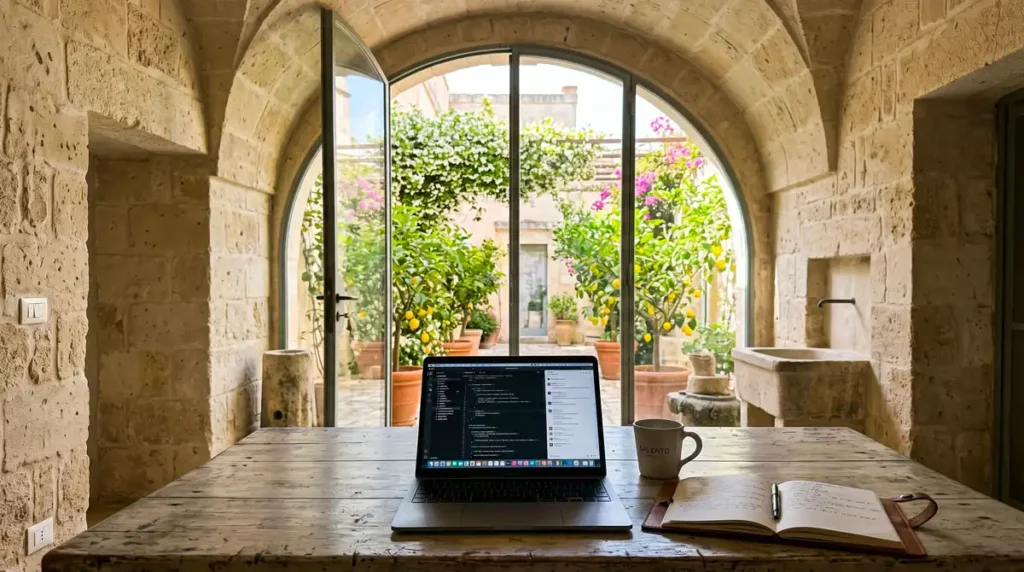
For digital nomads and remote professionals, reliable high-speed internet is essential. Connectivity varies significantly based on your exact location. In historic centers like Ugento or Presicce, fiber optic connections (FTTH) deliver speeds up to 1 Gbps. Conversely, isolated countryside masserie often depend on Fixed Wireless Access (FWA) or Starlink satellite systems. Always perform a physical speed test before signing a property lease.
💡 Local Tip by Carlo & Gloria
“When we moved from Milan to Ugento, our greatest breakthrough was building genuine human relationships with local artisans, shopkeepers, and farmers. In Salento, trust is built face-to-face. Introduce yourself with a smile, purchase your fresh produce from the neighborhood vendor, and participate in the evening passeggiata in the piazza. Within months, you will discover that you are not merely living in a town; you are an active part of a warm, supportive community.”
6. The 4 Best Towns for Expat Life in Basso Salento
Choosing the right town defines your daily experience. Here are our top four recommendations for permanent living:
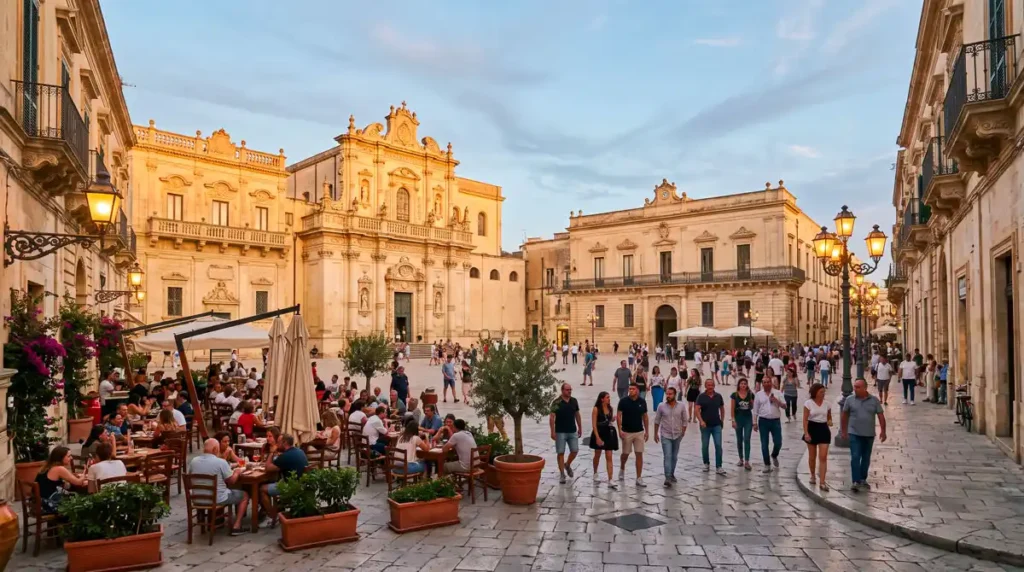
- Ugento: The Perfect All-Rounder: Ugento offers a lively year-round historic center, excellent supermarkets, medical clinics, and fast fiber internet. It sits just 8 minutes from the coast and 20 minutes from the Adriatic. For a complete cultural breakdown, explore our complete Ugento travel guide.
- Presicce-Acquarica: Romantic Baroque Architecture: Presicce is an architectural jewel certified among I Borghi più Belli d’Italia. It offers an active cultural life, subterranean historical wonders, and tight-knit community warmth. Read our full overview in the Presicce Puglia travel guide.
- Specchia: The Medieval Hilltop Sanctuary: Perched on a scenic hill, Specchia offers cooler summer breezes, stunning panoramic views, and a thriving community of international artists and writers.
- Tricase: The Cultural and Medical Hub: Tricase is a larger town offering a major regional hospital, secondary schools, sophisticated cultural events, and direct access to the picturesque fishing port of Tricase Porto.
7. Frequently Asked Questions About Relocating to Salento
Is Salento safe for foreign expats, solo female residents, and families?
Yes, Salento is one of the safest regions in Southern Europe. Violent crime is virtually non-existent in rural borghi, and communities actively look out for one another.
Can foreigners purchase property in Italy without restrictions?
Citizens of the EU, EEA, UK, United States, Canada, and Australia can buy Italian real estate with full freehold ownership rights under international reciprocity agreements.
What is the winter climate like in Southern Puglia?
Salento experiences mild winters with daytime temperatures averaging 12°C to 16°C. While frost and snow are extremely rare, winter days can feel damp and windy. Ensuring your home has adequate heating is essential.
How do you find reliable construction workers and artisans?
Always seek personal recommendations from local residents rather than searching generic online directories. In addition, work with a reputable local geometra who can oversee contractors and manage quality control directly.
Where should you dine while exploring potential hometowns?
Avoid generic tourist restaurants along the coastal roads. Instead, visit traditional family-run eateries where locals eat authentic seasonal dishes, as detailed in our guide to authentic trattorias in Salento.
Begin Your Salento Relocation Journey with Puglia Love
Relocating to Salento is not merely a change of address; it is an intentional lifestyle choice centered on well-being, community, and timeless Italian traditions. By planning your move carefully and embracing the rhythms of the territory, you can build a wonderful life under the Mediterranean sun.
Explore our comprehensive destination guides, accommodation reviews, and slow living insights across Puglia Love to start creating your new life today!