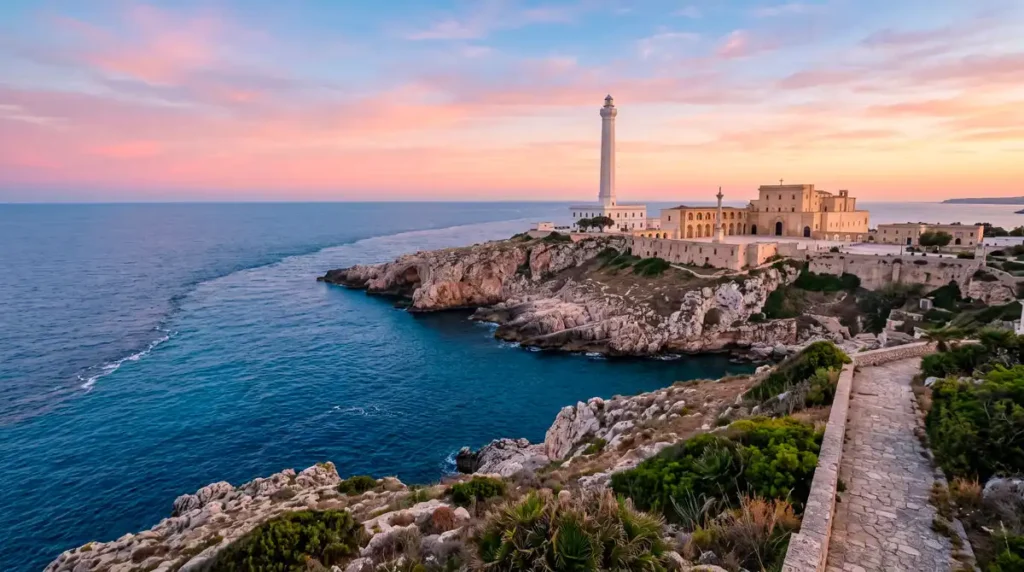
If you trace your finger down a map of Italy to the very tip of the heel, you will eventually reach the spectacular rocky promontory of Santa Maria di Leuca. For centuries, ancient Romans looked out from these vertigo-inducing cliffs and referred to this exact spot as Finibus Terrae, which translates directly to “the end of the earth.”
Today, this destination attracts thousands of international tourists and road-trippers. Consequently, during the peak summer month of August, crowds flock to the marina for quick commercial boat tours and quick selfies. However, for us at Puglia Love, living year-round as locals in the deep south of Salento, this town offers a completely different, deeply poetic soul.
Therefore, if you are a slow traveler looking to explore aristocratic 19th-century villas, hike breathtaking coastal trails, discover responsible ways to visit the sea caves, and find absolute silence at the monumental lighthouse, you belong here. Welcome to our ultimate local’s guide to the very end of Italy.
The Magic of “Finibus Terrae”: Where Two Seas Meet
To truly appreciate this destination, you must first understand its unique geography and spiritual weight. The monumental promontory of Punta Meliso officially divides the calm, sandy Ionian Sea from the wilder, rocky Adriatic Sea.
Interestingly, if you stand at the edge of the cliffs on a perfectly clear, windless day, you can actually see a distinct chromatic line in the water. This visible line marks the exact spot where the currents of the two different seas physically crash into each other. Looking out toward the endless horizon, you can easily feel the powerful spiritual energy that fascinated ancient civilizations and sailors for millennia. Furthermore, according to local legend, Saint Peter the Apostle landed right here to begin his evangelization of Europe, making it a crossroads of history and faith.
Top Things to Do in Santa Maria di Leuca (The Slow Way)
Escaping the loud commercial boat tours and tourist traps is surprisingly simple. You just need to know where to look. Here are our favorite historical and cultural gems that demand a slower pace.
The Monumental Lighthouse and the Sanctuary at Dawn
The unquestionable symbol of the town is its magnificent white lighthouse. Standing 47 meters tall and positioned 102 meters above sea level, it operates as one of the most important and powerful lighthouses in all of Italy.
Right next to it sits the ancient Basilica of Santa Maria de Finibus Terrae. Because Saint Peter supposedly landed here, early Christians built this historic sanctuary directly over the ruins of a pagan Roman temple dedicated to the goddess Minerva. In fact, a famous Salento proverb claims that before entering Heaven, every soul must first visit this exact sanctuary.
💡 LOCAL TIP BY CARLO & GLORIA: At midday in August, the main lighthouse square turns into a sweltering oven invaded by tourist buses. To experience the true mystical magic of Finibus Terrae, we strongly recommend waking up early. We usually arrive at 5:30 AM with a thermos full of hot espresso. Waiting in absolute silence for the sun to rise directly from the Adriatic water, while the rest of the world sleeps, is a slow travel experience that will profoundly change your trip.
The Apulian Aqueduct Waterfall (Cascata Monumentale)
Just below the sanctuary square, you will find a truly unique piece of engineering. The Cascata Monumentale represents the grand finale of the massive Apulian Aqueduct, which ranks as the largest water pipeline in Europe.
Engineers built this impressive structure during the Fascist era in the 1930s to celebrate finally bringing fresh drinking water to the arid southern region of Puglia. The aqueduct officially ends its long journey by cascading down a monumental double staircase of 296 steps, straight into the Ionian Sea. Because the local municipality wants to conserve precious water, they only turn on the waterfall on specific dates during the summer. Whenever it flows, it creates a spectacular visual show.
Strolling Among the Eccentric 19th-Century Villas and “Bagnarole”
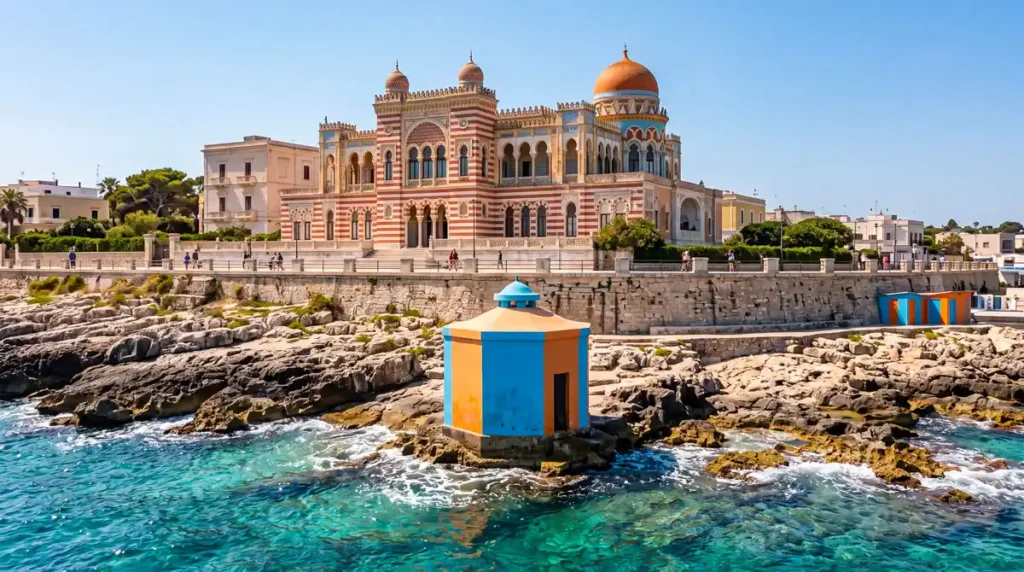
During the late 1800s, Santa Maria di Leuca transformed into the ultimate summer playground for the wealthy aristocracy of Lecce. As a result, you will find over 40 eccentric 19th-century villas lining the entire seafront promenade.
Walking along the coastal road, you will spot bizarre architectural styles blending together perfectly. You can admire Moorish palaces with Arabic domes (like the famous Villa Sticchi), Gothic castles, and Pompeian-style mansions (like Villa Meridiana).
Furthermore, look closely at the rocky shoreline directly below the villas. You will notice small, colorful stone cabins built right on the water’s edge. Aristocrats called these bagnarole. Their colors often matched the main villa above. Wealthy noblewomen used them to bathe in the sea privately, perfectly hidden from the sun to protect their fashionable pale skin from tanning!
Exploring the Coastline: Sea Caves and Cliffs
The coastline surrounding the cape is hollowed out by dozens of spectacular sea caves (Grotte). However, visiting them requires the right approach.
Responsible Boat Tours and Kayaking
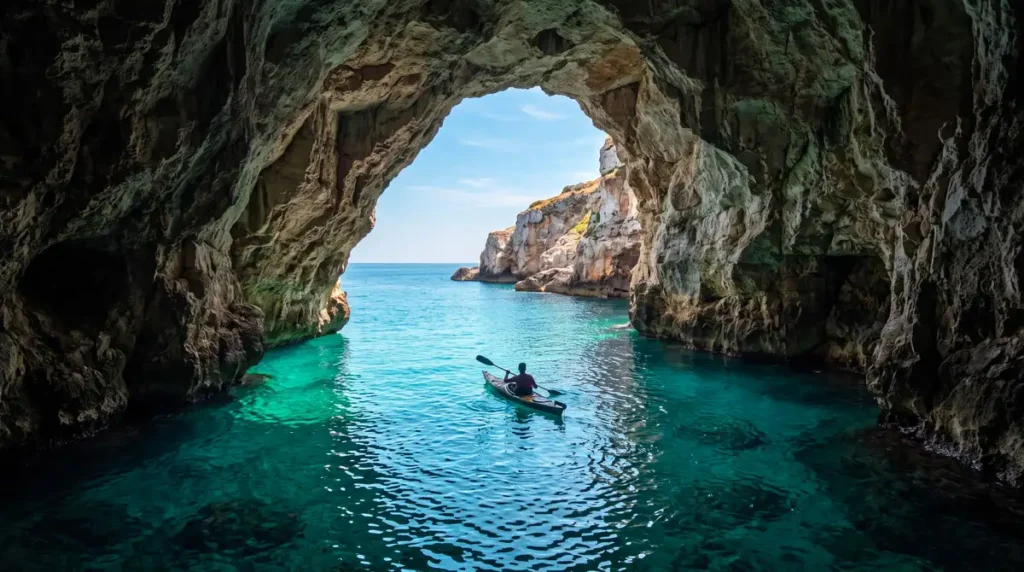
Most tourists buy tickets for massive, overcrowded boats that rush from cave to cave with loud music playing. We highly advise against this. Instead, embrace the slow travel philosophy.
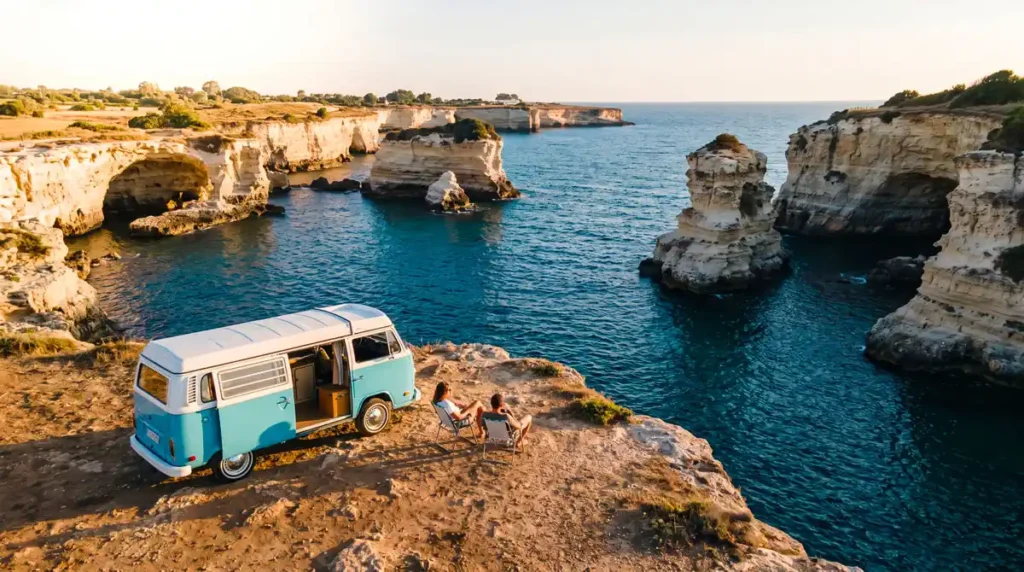
Go to the tourist port and rent a small traditional wooden boat (called a gozzo) with a local fisherman. Alternatively, rent a kayak or a stand-up paddleboard early in the morning. Paddling silently into the Grotta del Soffio (Breath Cave) or the Grotta delle Tre Porte (Three Doors Cave) allows you to hear the echo of the water and admire the incredible turquoise reflections without the smell of diesel engines. The coast is divided into the Levante (East) and Ponente (West) sides, each offering completely different rock formations.
Active Slow Travel: Trekking the Dramatic Coastline
If you want to leave the town behind and immerse yourself in wild Apulian nature, you must tie your hiking boots.
Hiking from Leuca to the Ciolo Fjord (Sentiero del Ciolo)
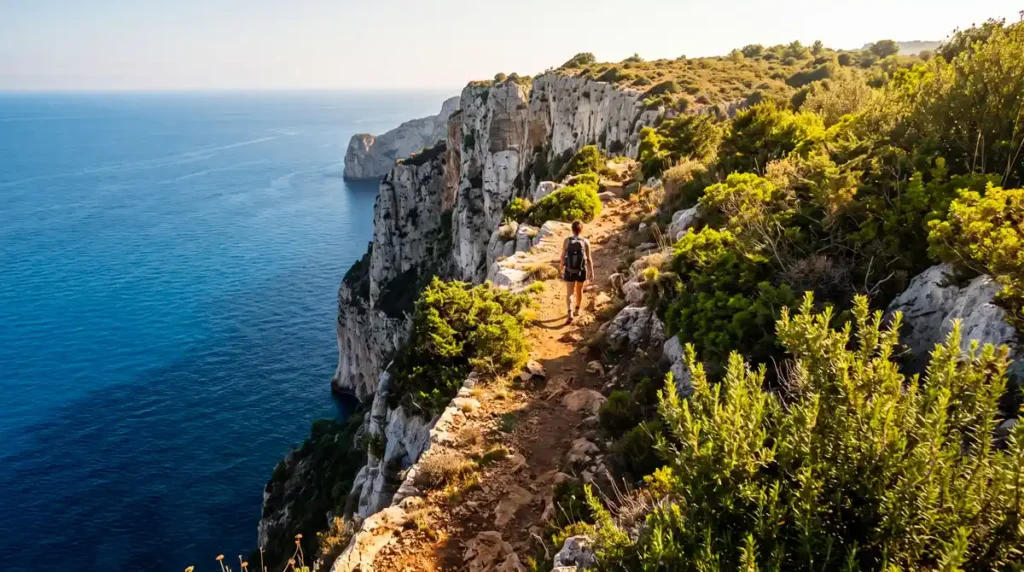
Our absolute favorite outdoor activity involves hiking the ancient goat paths that connect the town to the stunning Ciolo Fjord. Starting just outside the town limits near Punta Meliso, the Sentiero del Ciolo (Ciolo Trail) winds its way along dramatic cliffs suspended high above the deep blue sea.
After a couple of hours of moderate trekking through wild rosemary, wild orchids, and dense Mediterranean scrub, you will arrive at a majestic bridge spanning a natural canyon. Do you want to know the secrets of this spectacular bridge? Read our ultimate local guide on Ponte Ciolo: The Bridge, the Fjord, and the Legendary Dives of Salento to discover the best swimming spots and cliff diving history.
Best Beaches Near Santa Maria di Leuca
The town itself has very little sand; it is mostly composed of rocks and concrete platforms. Therefore, if you crave a classic beach day, you need to drive just 10 minutes along the Ionian coast. We highly recommend visiting the sheltered bay of Felloniche or the picturesque Marina di San Gregorio. San Gregorio, in particular, offers spectacular sunset views where you can watch the sun melt into the sea while sipping an Aperol Spritz on the rocks.
Practical Info: Best Time to Visit and What to Eat
To fully embrace the slow travel philosophy, timing your visit is crucial. Because July and August bring chaotic crowds, parking nightmares, and intense heat, you should plan your trip for May, June, September, or October. During these beautiful shoulder months, the weather remains warm enough for swimming, and you will have the historic villas almost entirely to yourself.
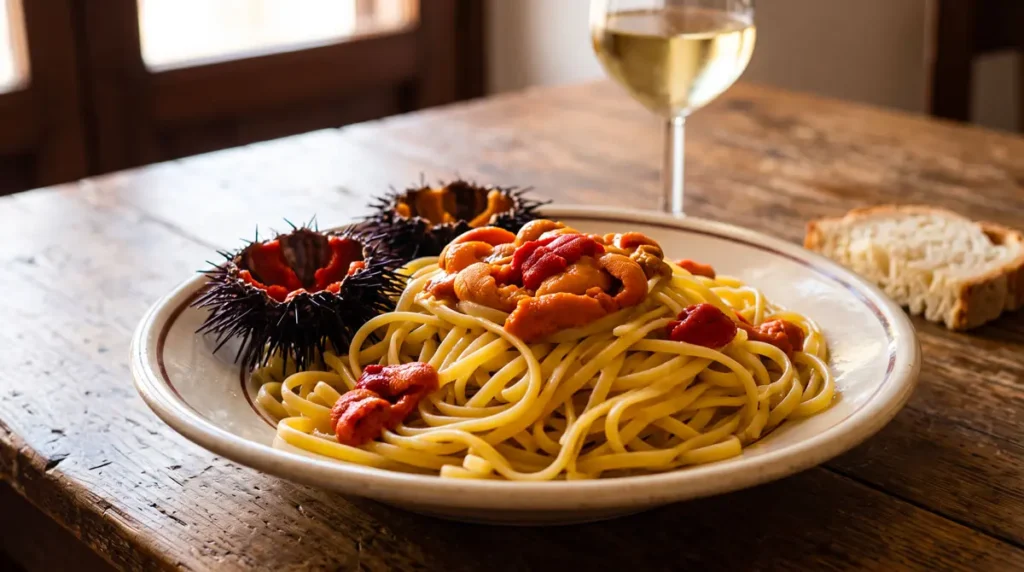
When it comes to food, avoid the tourist trap restaurants located right on the main promenade. Instead, walk into the small residential alleys to find authentic Trattorie. You must order the local specialty: linguine pasta with fresh sea urchins (ricci di mare) or a plate of raw red prawns. Additionally, try the Taieddha, a rich baked dish of rice, potatoes, and mussels. For more insider tips on navigating Puglia like a pro, check out our The Ultimate Puglia Survival Guide: Slow Travel & Local Secrets.
Where to Stay: Finding Peace in the Deep South of Salento
While the coastal town offers many modern hotels and apartments, true slow travelers should always look inland. Just a few miles behind the cape, ancient fortified farmhouses called Masserie dot the quiet, silver-leafed countryside.
Staying in a carefully restored Masseria allows you to sleep under traditional star-vaulted ceilings, eat zero-kilometer organic breakfasts made from local produce, and reach the lighthouse in just 10 minutes by car. Explore our curated selection of authentic accommodations by reading Where to Stay in Salento: Best Areas, Masserie & Local Bases to book your perfect Apulian escape.

1 thought on “Santa Maria di Leuca: A Slow Travel Guide to the End of Italy (Finibus Terrae)”