If you are planning a trip to Southern Italy and searching for Gallipoli Puglia online, the algorithm will likely flood you with images of crowded beach clubs, buzzing summer nightlife, and August frenzy. But for us at Puglia Love, living in the Salento peninsula year-round as locals, we know that is just a seasonal mask.
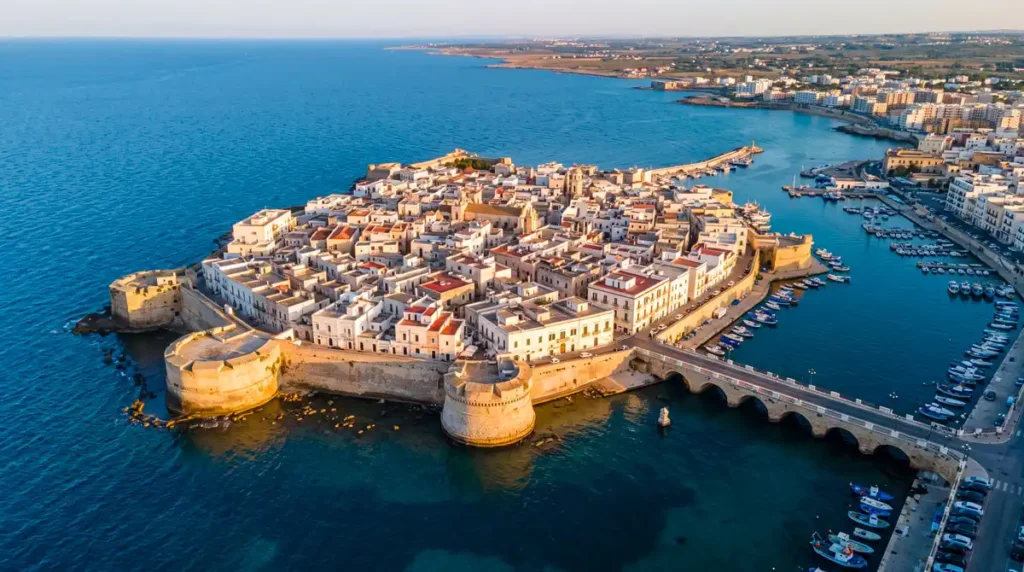
Derived from the ancient Greek Kalé Polis (Beautiful City), the true soul of this destination is a limestone island floating in the Ionian Sea. It is steeped in maritime history and guarded by imposing defensive walls. Therefore, if you are a slow traveler looking to discover hidden underground olive oil presses, breathtaking Baroque churches, authentic food born from pirate sieges, and quiet corners away from the crowds, you are in the right place. Welcome to our ultimate local’s guide.
The Unique Geography of Gallipoli Puglia
To truly understand this destination, you must first understand its shape. Interestingly, the city is literally split into two distinct areas. On the mainland, you have the modern town (Borgo Nuovo). Meanwhile, the ancient Centro Storico (Old Town) is built entirely on a tiny limestone island. These two contrasting worlds are connected to each other by a single 16th-century arched stone bridge.
For centuries, this strict isolation was a vital defense mechanism. Indeed, the narrow, winding alleys of the old town weren’t just built for charming aesthetics. They were specifically designed as an architectural labyrinth to break the harsh winter Tramontana winds coming off the sea. Furthermore, they served to brutally disorient invading Saracen pirates during their frequent coastal raids in the history of Gallipoli Puglia.
Top Things to Do in the Old Town (Centro Storico)
Exploring the historical center is like walking through an open-air museum. Here are the absolute must-see historical gems.
The Greek Fountain: A Renaissance Mystery
Just before crossing the bridge into the old town, you should stop to admire the Fontana Greca (Greek Fountain). For a long time, historians believed it was built in the 3rd century BC, making it the oldest fountain in Italy. Today, however, art historians agree it is actually a magnificent Renaissance masterpiece. Its intricate bas-reliefs tell mythological stories, making it a fascinating stop for art lovers.
The 16th-Century Bridge and the Angevin Castle
As soon as you cross the historic stone bridge, you are met by the imposing Angevin-Aragonese Castle (Castello Angioino), which is almost entirely surrounded by water. Originally built in the 13th century and modified over the centuries to resist cannon fire, it stands as the guardian of the city. From here, take a relaxing walk along the Riviera, the panoramic road that hugs the ancient defensive walls. The best time for this walk is golden hour, watching the sun melt directly into the sea behind the protected nature reserve of Sant’Andrea Island.
Sant’Agata Cathedral & The “Horrific” Malladrone
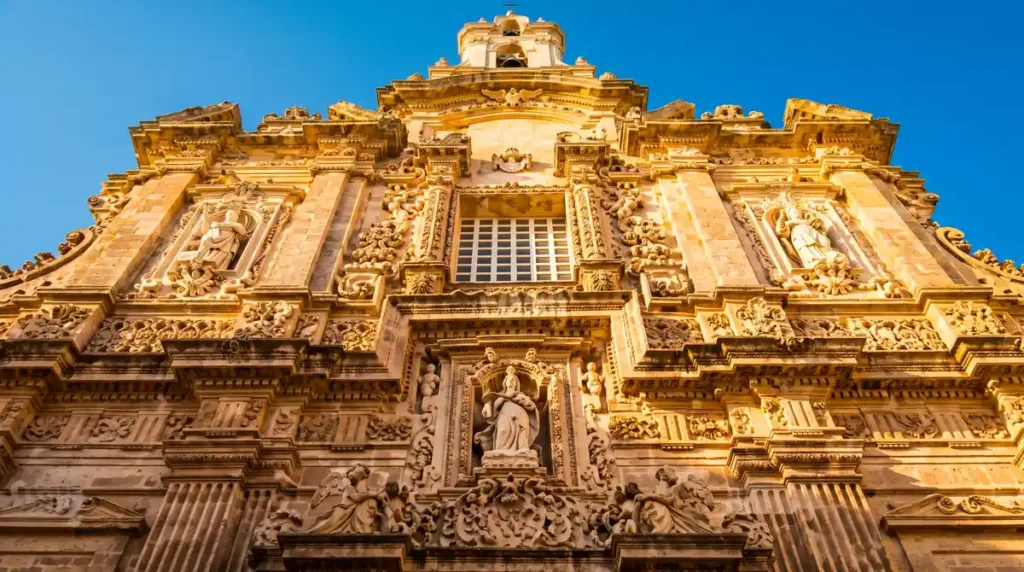
Hidden deep in the tight weave of residential alleys is the magnificent Cathedral of Sant’Agata. Built from carparo—a highly porous local limestone that turns a stunning honey-gold hue under the southern Italian sun—its intricate façade is a breathtaking masterpiece of Lecce Baroque architecture.
Local Secret: Do not miss the smaller Church of San Francesco d’Assisi located nearby. It houses the wooden statue of the Malladrone (the bad thief crucified next to Jesus). His face is carved with an expression of pain and rage so frighteningly realistic that the famous Italian poet Gabriele D’Annunzio described it as possessing a “horrific beauty.”
The Church of Santa Maria della Purità
Located right on the seafront walls, this church looks incredibly simple on the outside, but stepping inside will leave you speechless. Built in the 1660s for the brotherhood of dockworkers, the interior is entirely covered in rich stuccoes and paintings. Moreover, the absolute highlight is the stunning floor, made entirely of colorful majolica tiles depicting marine motifs and floral patterns.
The Secret Underground Oil Presses (Frantoi Ipogei)
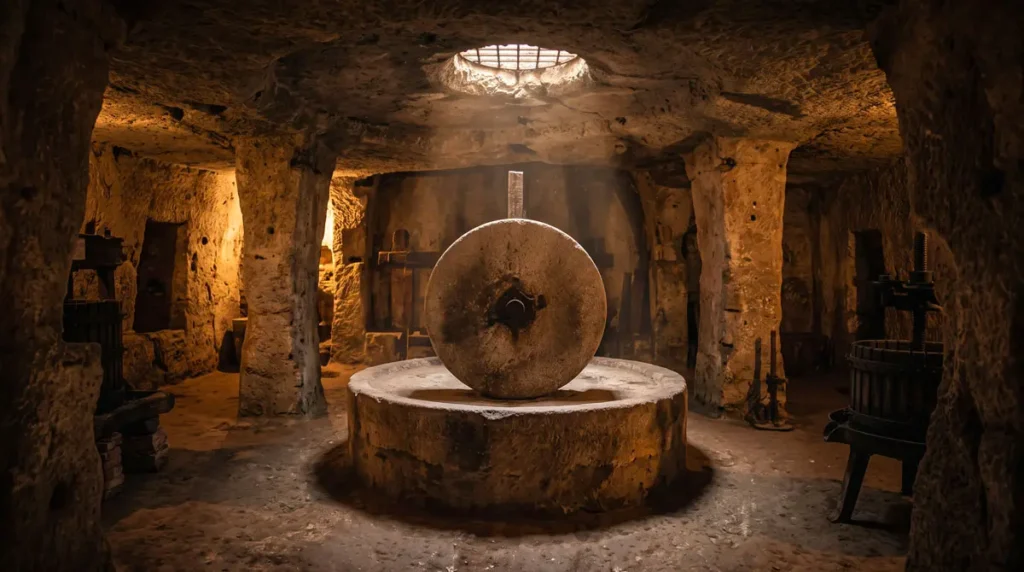
This is a mind-blowing piece of history that most tourists completely overlook. In the 17th and 18th centuries, Gallipoli Puglia was not a tourist hotspot; it was the world capital of lamp oil (olio lampante). Beneath the charming streets lie dozens of Frantoi Ipogei (underground olive presses).
Here, in damp, dark caves carved directly into the rock, workers (nachiri) and blindfolded donkeys crushed olives to produce a low-grade oil used exclusively for lighting. Astonishingly, this very oil illuminated the streets of London, Paris, and even the Winter Palace in Saint Petersburg! Visiting the restored Frantoio Ipogeo of Palazzo Granafei is an unforgettable journey into the agricultural roots of the Salento region.
Authentic Food in Gallipoli Puglia: Tasting Local History
No slow travel experience is complete without tasting the local traditions. The culinary scene here is deeply tied to its maritime soul.
The Authentic Fish Market
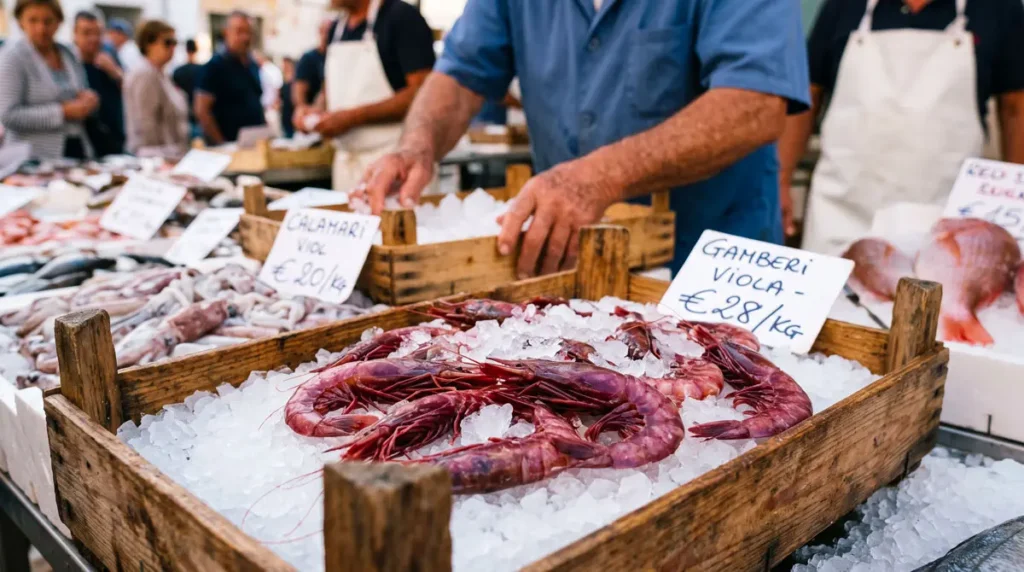
Just below the castle, protected by a modern canopy, lies the vibrant daily fish market.
💡 LOCAL TIP BY CARLO & GLORIA: If you want the real, unfiltered local experience in Gallipoli Puglia, avoid the fish market at lunchtime when it’s packed with tourists taking selfies. Instead, we wake up early and get there around 7:00 AM. This is when the small wooden fishing boats (paranze) return to port and fishermen untangle their nets. You can buy the highly prized “Gamberi Viola” (purple prawns)—which are meant to be eaten strictly raw—straight from the source. Grab a “caffè in ghiaccio con latte di mandorla” (iced coffee with almond milk) at a nearby kiosk, listen to the locals negotiating loudly in thick dialect, and watch the city wake up authentically.
Scapece Gallipolina: The Pirate Survival Food
You cannot leave the Old Town without trying Scapece. You will find it sold in the alleys from large wooden tubs called calette. It consists of small floured fish, fried and marinated in layers with breadcrumbs, vinegar, and highly prized saffron, which gives it a distinctive fluorescent yellow color.
Historical fact: This unique dish was invented centuries ago out of pure necessity. Because the vinegar preserved the fish for months without refrigeration, it allowed the local population to survive inside the walled island without starving during prolonged and bloody pirate sieges!
Escaping the Crowds: Slow Travel Beaches
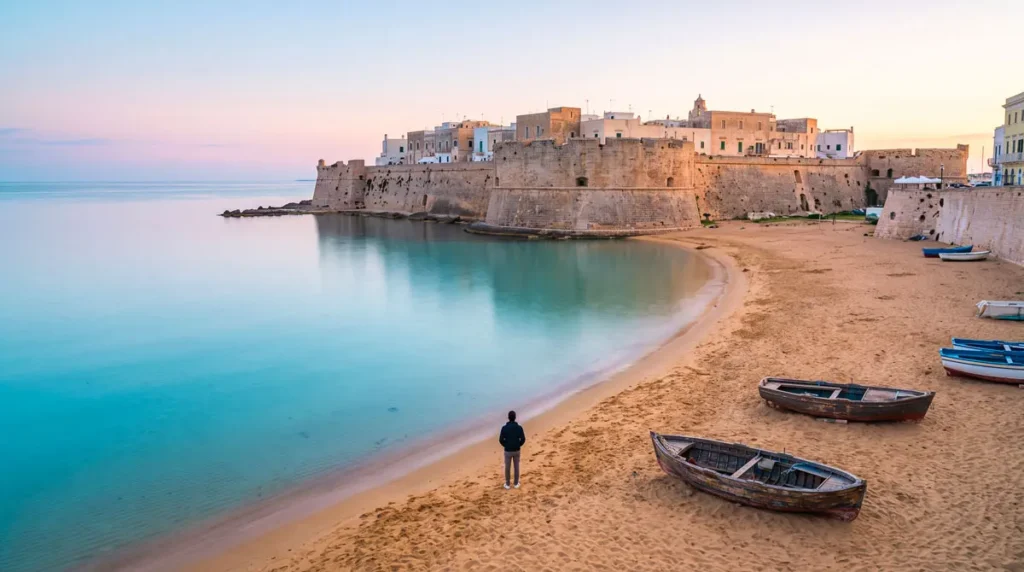
If you are visiting during the peak summer months, finding tranquility requires a bit of local knowledge.
Spiaggia della Purità at Dawn
Right below the old town walls sits the Spiaggia della Purità (Beach of Purity), a beautiful crescent of golden sand. We highly advise avoiding it at midday in August. Instead, embrace the slow travel philosophy and head there at 6:30 AM. The water is as flat and clear as glass, the ancient walls glow softly in the morning sun, and you’ll share the sand only with a few older locals.
Wild Beaches South of Gallipoli
While the summer masses flock to the noisy beach clubs of Baia Verde, we highly recommend driving slightly further south. Head towards the Punta Pizzo Nature Reserve to find pristine pine forests meeting the sea. Even better, drive 30 minutes south to discover the unspoiled shores of our hometown. You can find your perfect secluded spot by reading our Ultimate Ugento Travel Guide.
Practical Info: Best Time to Visit and Parking
To truly embrace the slow travel philosophy, timing is absolutely everything. Try to avoid August if you can. The best months to visit Gallipoli Puglia are May, June, September, and October. During these shoulder seasons, the sea is still incredibly warm for swimming, and the old town regains its peaceful silence.
Navigating a medieval island with a car is never a good idea. The entire Old Town is a strict ZTL (Restricted Traffic Zone) monitored by cameras 24/7. Do not attempt to drive onto the island, or you will face hefty fines. Instead, park your car in the designated port area in the modern town. From there, simply walk across the bridge. It’s a pleasant 10-minute stroll that completely saves you from hours of traffic stress.
Where to Stay: Finding Silence in Authentic Masserie
To truly embrace our Puglia Love slow travel philosophy, we strongly suggest staying slightly outside the busy city centers. The best strategy is to explore the coastal towns during the day and retreat to the peaceful countryside at night.
A beautifully restored Masseria (fortified farmhouse) nestled among the ancient olive groves guarantees absolute peace, zero-kilometer organic breakfasts, and the relaxing song of cicadas instead of city traffic. Ready to plan your basecamp? Read our local recommendations on Where to Stay in Salento to find your perfect authentic accommodation.

1 thought on “Gallipoli Puglia: A Local’s Guide to the Old Town & Slow Travel”