If you walk through any historic village in Salento, you will notice a warm, golden glow radiating from the buildings. This is the magic of Pietra Leccese, the soft, porous limestone that defines Apulian architecture. However, understanding this stone requires meeting the artisans who shape it.
We are Carlo and Gloria. To truly appreciate our region’s architectural heritage, we left Ugento early one morning and drove to a dusty, sunlit workshop in Cursi. We went to meet Maestro Antonio, a third-generation stone carver (scalpellino) who has spent forty years mastering this ancient craft.
In this edition of our Meet the Locals series, we explore the dusty reality of stone carving, discover the secrets behind traditional star-vaulted ceilings, and share Antonio’s insider tips for travelers.
1. The Soul of Apulian Architecture: What is Pietra Leccese?
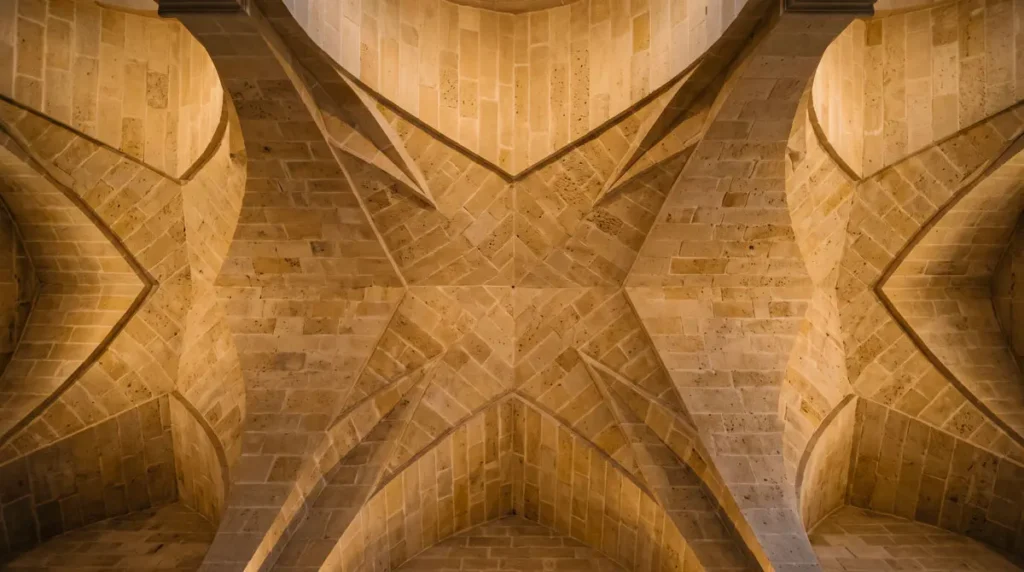
Pietra Leccese is a unique form of limestone extracted primarily in the central Salento area. Millions of years ago, this territory was submerged underwater. Consequently, the stone is rich in marine fossils. When freshly extracted, the stone is incredibly soft and easy to carve. Over time, however, exposure to the air hardens the surface, giving it a beautiful honey-colored patina.
This remarkable flexibility allowed 17th-century architects to carve the intricate, theatrical facades of Lecce’s Baroque churches. Today, it remains the foundation of local rural architecture, particularly for constructing the iconic volte a stella (star-vaulted ceilings).
2. Inside the Workshop: Meeting Maestro Antonio
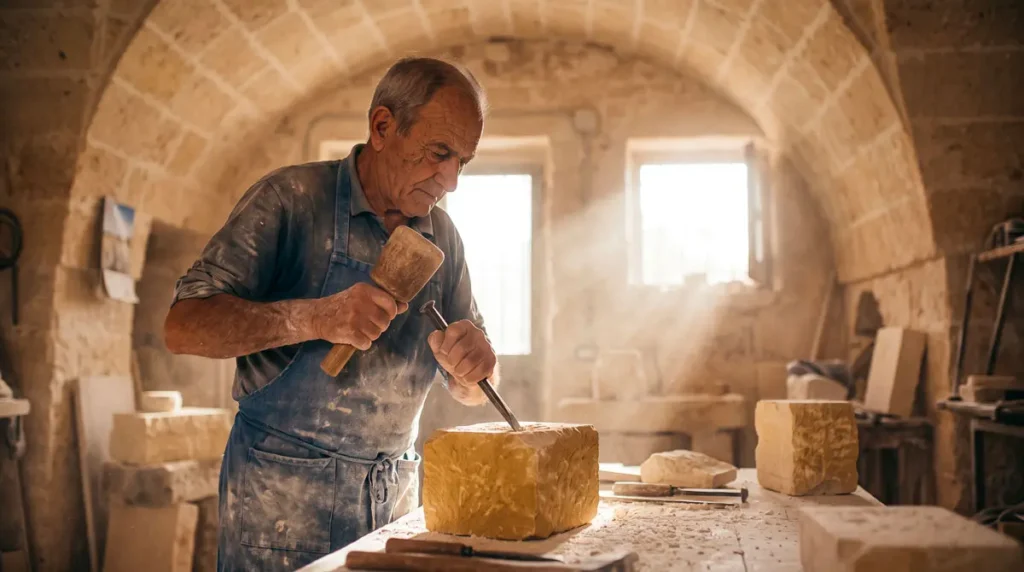
As soon as we stepped into Antonio’s workshop, a cloud of fine white dust settled on our shoes. The air smelled of dry earth and strong morning espresso. Antonio welcomed us with a firm, calloused handshake. He wore a faded blue apron heavily coated in limestone powder.
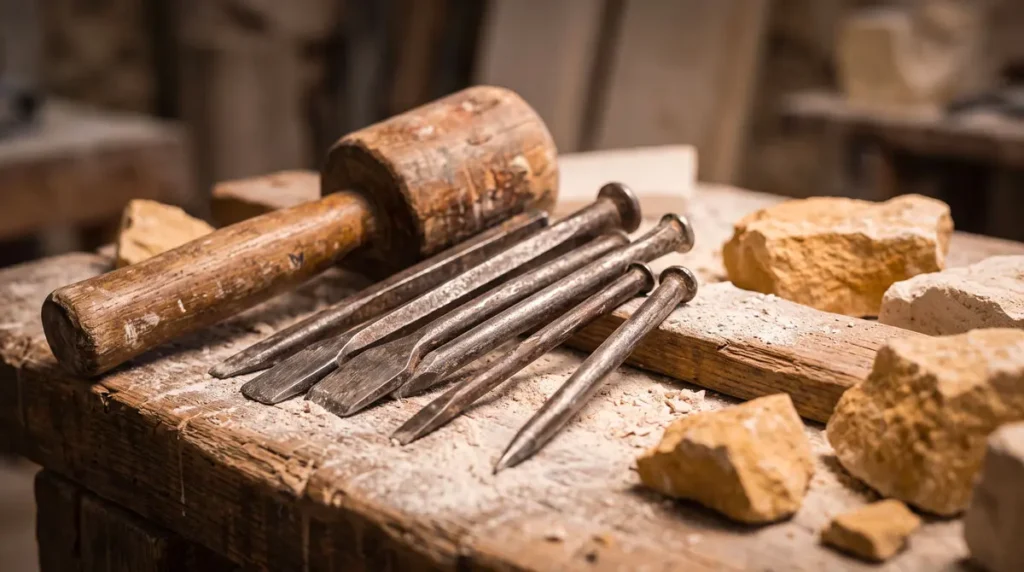
“This dust is my life,” Antonio smiled, wiping his brow. He was currently restoring a damaged archway for an old masseria. Watching him work was mesmerizing. He used traditional chisels and a wooden mallet, tapping the stone with rhythmic, precise strikes. Despite the availability of modern machinery, Antonio insists that true restoration requires the sensitivity of human hands.
3. The Interview: Preserving the Ancient Craft of Stone Carving
Over a second cup of coffee, we sat on wooden crates surrounded by half-finished sculptures and asked Antonio about his lifelong dedication to the craft.
How is working with Pietra Leccese different today compared to 50 years ago?
“When my grandfather taught me, everything was done entirely by hand. We quarried the blocks manually and transported them on wooden carts. Today, large companies use CNC laser machines to cut the stone perfectly straight. While machines are faster, they strip the stone of its soul. A machine cannot feel the natural veins of the limestone. Therefore, I still finish every single piece by hand because imperfections make the stone beautiful.”
What is the secret to building authentic star-vaulted ceilings (volte a stella)?
“Patience and geometry. A true star vault is built entirely without cement. We cut the stones perfectly wedge-shaped so they lock together under their own weight. The central keystone holds the entire structure in balance. If you remove the keystone, the whole room collapses. It is an architectural miracle that keeps houses naturally cool during our burning Salento summers.”
What hidden corner of Salento should every traveler see to appreciate local stone architecture?
“Everyone goes to Lecce to see the grand Baroque churches. However, I always tell travelers to visit the historic center of Specchia or the underground olive mills in Presicce. Down in those subterranean mills, you can see how our ancestors carved directly into the living bedrock. It is raw, powerful, and completely authentic.”
💡 Local Tip by Carlo & Gloria
“If you are planning to buy and restore a property in Salento, never hire a generic construction company to patch up ancient stone walls. Always seek out a traditional scalpellino. They know exactly how to let the stone breathe, preventing rising damp and preserving the historical integrity of your home.”
4. Restoring a House in Puglia: Why You Need a Master Artisan
Many international expats fall in love with Salento’s historic townhouses. However, renovating these properties requires specialized knowledge. Standard modern cement will suffocate Pietra Leccese, causing severe humidity problems. Master artisans like Antonio use traditional breathable lime plaster to ensure the stone remains healthy. If you are considering a property purchase, read our comprehensive guide on moving to Puglia to understand the real renovation costs.
5. How to Support Local Salento Artisans
True slow travel means supporting the local economy and preserving cultural heritage. When you visit Salento, take time to seek out independent artisan workshops. Purchasing a small, hand-carved stone lamp or a traditional mortar directly from the maker provides a far more meaningful souvenir than generic airport gifts.
Explore our local Salento guides on Puglia Love to discover more authentic stories and hidden cultural gems!